The Chrono-Christmas Glitch

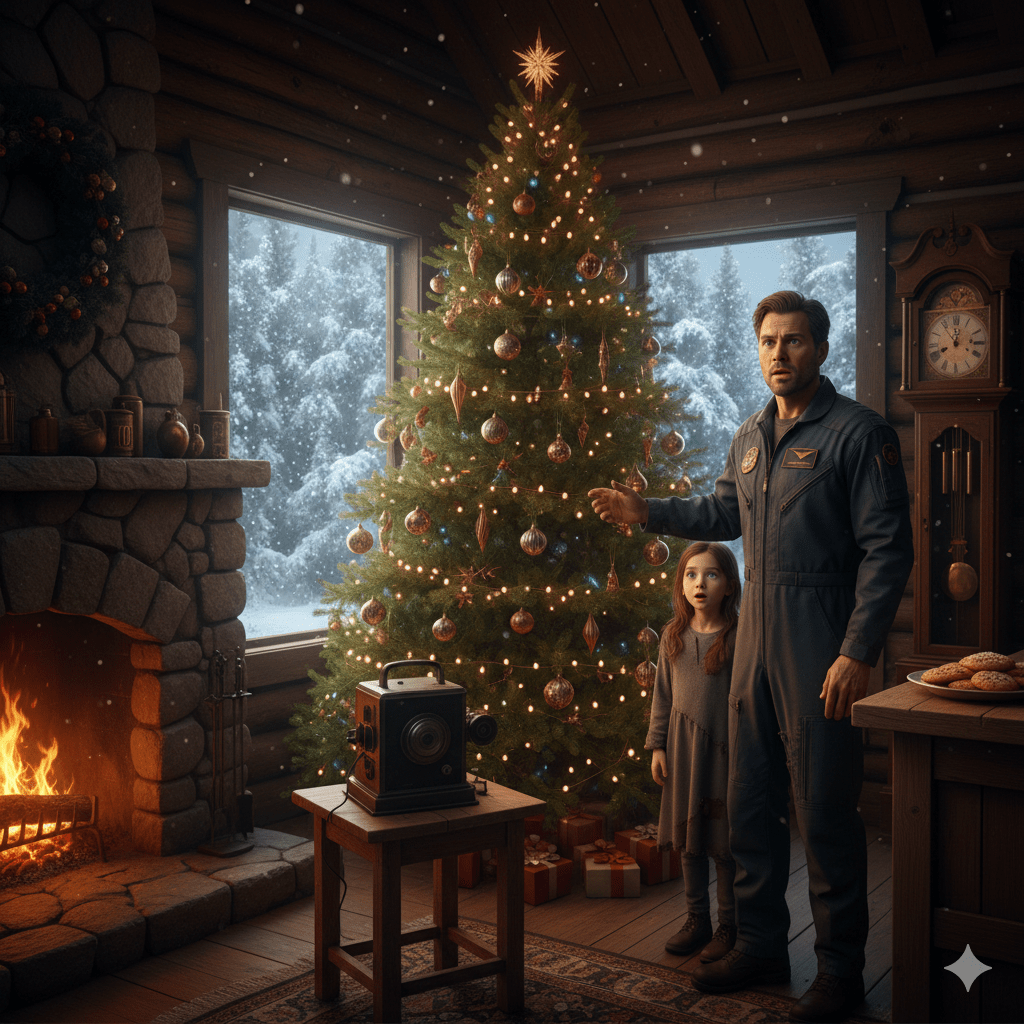
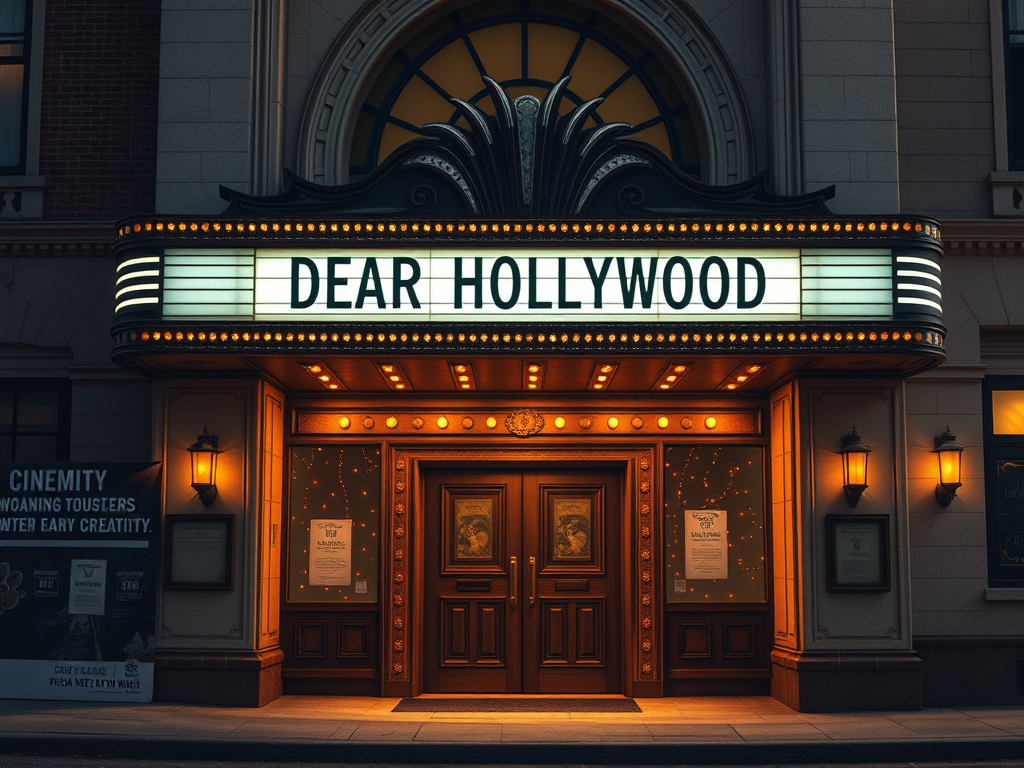
Image generated by Gemini

The neon pulse of New Tokyo felt colder than usual as the artificial snow—a byproduct of the city’s atmospheric scrubbers—drifted down like almond slivers onto the metal walkways. The city, a colossal sprawl of chrome and carbon, hummed with the ceaseless rhythm of a million lives under perpetual twilight. Each hab-unit, a tiny cell in the vast hive, offered its occupants a fleeting illusion of privacy, a fragile shield against the overwhelming scale of their existence.

In the corner of a cramped hab-unit, barely larger than a maintenance pod, Kael sat before a flickering holographic projector. It wasn’t showing the latest data-streams or hyper-ads, nor the endless loop of manufactured entertainment that usually filled the void. Instead, it displayed a grainy, centuries-old image of a pine tree, impossibly green, that glitched to the point of turning into stipple before it dissolved. The resolution was poor, the colors fading in and out, but to Kael, it was a window to a forgotten world.

“Is that it?” a small voice asked, full of innocence and curiosity. Rin, Kael’s daughter, leaned in, her small face illuminated by the emerald light of the projection, her eyes wide with wonder. She had only ever seen the sterile, metallic landscapes of New Tokyo.

“That was a Christmas tree,” Kael said, pulling her close to his side, his voice rough, raspy from the recycled air that circulated through their sealed environment. “Back when the seasons changed on their own, and trees grew from the ground, not in climate-controlled bio-domes.” He pointed to a faint shimmer in the projection. “Those are decorations, called ornaments. And the bright bits? Those were tiny lights. And through the windows, real snow fell all through the night, making everything sparkle when the sun rose the next morning.”

He reached into the pocket of his worn flight suit, a relic from his days as a deep-space hauler, and pulled out a small, round object. It was a genuine orange—a luxury item, a forbidden fruit smuggled in from the orbital hydro-farms, costing more credits than a month’s oxygen scrip. He peeled it slowly, the sharp, sweet, citrus scent a potent, almost forgotten aroma, cutting through the metallic tang of the station’s recycled air.

“Daddy,” Rin said, her eyes still fixed on the holographic tree, a thoughtful frown creasing her brow. “Can the projector… can it bring back the smell of the tree?” She sniffed the air, as if trying to conjure the scent from the pixels themselves. “And… and the snow? The real snow! Can I feel it?”

Kael chuckled softly. “Oh, little star, if only I could. The projector can show us images, sounds sometimes, but to bring back a scent… that’s a different kind of tech and I would need a lot more power and upgrades–– and at that, it would not be the real scent of the tree.”

He handed a slice to Rin. As she tasted the fruit of an Earth she would never see, a world that existed only in fragmented data-logs and faded projections, the distant hum of the fusion reactor outside their window seemed to fade, replaced, just for a moment, by the faint echo of a choir.

“Merry Christmas Eve, Rin,” he whispered, brushing her hair aside, watching her savor the alien sweetness.

He tinkered with the old holographic unit, a scavenged piece of pre-collapse tech he’d lovingly restored. He’d often pushed its limits, extracting every ounce of its archaic magic. He adjusted a dial, intending to enhance the image, but as his fingers brushed a loose wire, a jolt coursed through the unit, and a blinding flash erupted from the projector.

The hab-unit dissolved around them. The metallic walls, the flickering neon, the distant hum of the reactor—all vanished in a dizzying blur of light and color. It felt like they’d slid into a hyper-jump, but not across vast interstellar distances. Instead, they plunged through layers of time, through forgotten memories and echoes of a world long gone.

When the light faded, the air was suddenly thick with the scent of burning wood and something else, something sweet and warm. The sterile, recycled air was replaced by a crisp, cold breath that carried the unmistakable aroma of pine. Kael blinked, his eyes adjusting.

They were no longer in their cramped hab-unit. They were in a rustic log cabin, its walls made of rough-hewn timber. A stone fireplace dominated one wall, a cheerful fire crackling within, casting dancing shadows across the room. Though the windows, fat, fluffy snowflakes drifted lazily down onto the sills, the grove beyond, blanketed with sleeves of snow on their branches. Real snow.

On a worn wooden counter in the corner, a platter of golden-brown cookies sat cooling, their aroma of cinnamon and sugar almost overwhelming. A large, bushy evergreen tree stood proudly in the center of the room, adorned with strings of bright, colorful lights and shimmering glass ornaments.

Rin gasped, her eyes wider than Kael had ever seen them. She stared at the tree, then at the fire, then at the snow falling outside. “Daddy,” she whispered, her voice barely audible. “I can smell the … the tree… The snow!” she shouted, running to the window, her breath fogging the cold glass pane.

Kael could only stare, his mind reeling. The air was colder, fresher, invigorating. He reached out, his hand passing through the warm air emanating from the fireplace, feeling the radiant heat on his skin. This wasn’t a projection. This was real.

A grandfather clock in the corner chimed softly, a deep, resonant sound that vibrated through the cabin, marking a time that was, and yet, somehow, now. They had fallen, not through space, but through time, landing in a Christmas of a forgotten past.
“Crime Is Down” – Or Have We Just Closed our Beaches?

As a writer of Science Fiction, I share the blame with my fellow writers for stories written about a dystopian future, but the idea of writing science fiction is fueled by what we feel the future holds.

We keep hearing that crime statistics are down–much better than they were in the 1950s, that kids are “statistically safer” than ever. But let’s put this into perspective:

In the 1950s, kids walked to school alone. Rode bikes across town on busy streets. Played in parks until dark. Went trick-or-treating for hours unsupervised. They left the house at 7:00 AM, in the summer, and their only obligation was to be back by dinner. There were no cell phones to get in touch with them and no game plan as to what they were doing or where they were going.

Today they are chauffeured everywhere, tracked by phone and never out of range from adult helicoptering. So when someone says “child abductions are down,” I think: Of course they are—we’ve essentially put kids under house arrest.

That’s like closing all the beaches and announcing “Shark attacks are at historic lows!” Well, yeah. There’s no opportunity for attack when nobody’s in the water.

The same logic applies across the board:

  • Burglaries down? We have Ring cameras, alarm systems, and never leave our doors unlocked.
  • Street crime down? People don’t walk places anymore—they drive everywhere.
  • Assault down? We avoid whole neighborhoods and stay inside after dark.
  • Car jacking is down: Cars have 360 degree cameras with recorded footage, alarms and can be shut off remotely. No one leaves their keys in the cars with the windows opened like they did in the 1950’s. Heck, keys were an “option” to starting the engine.

We haven’t made society safer. We’ve made ourselves smaller. We’ve adapted to danger by surrendering freedom—building higher fences, installing more cameras, restricting our movements, and never letting our kids experience the independence we once had.

The statistics don’t show we’ve solved the problem. They show we’ve accepted defeat and learned to live in a cage we pretend is normal.

When you have to fundamentally change your behavior to avoid becoming a statistic, the danger didn’t decrease—you just stopped showing up in the data.

This makes for great Sci-Fi writing… so thank you all.

Hollywood’s Storytelling Crisis: A Call to Action

Once upon a time, the world looked to you for dreams. Your stories lit up the dark. You taught us to hope, to fight, to love bigger than we ever thought we could. You drew us into the theaters–Heck! My first real job, at fifteen, was that of being an usher at the Algonquin Theater in Manasquan, NJ, wearing a suit several sizes too big, where my pants were belted up around my rib cage and I could stick my hand out the fly to collect tickets. I didn’t care, I loved watching the movies, over and over again. I know a part of my love for storytelling had its roots watching the dreams that came out of Hollywood, but somewhere along the way, you started recycling the dream.

Let’s be clear: the issue isn’t foreign productions undercutting you with cheaper labor or tax incentives. This isn’t about money—this is about meaning. While you’re too busy crunching box office projections, pushing agendas or polishing another paint-by-numbers sequel to a storyline so predicable, so superficial, the rest of the world is blistering by you, telling stories that feel alive.

Look around. South Korea delivers genre-bending tales that slip between social commentary and character drama without blinking. Scandinavian series dig deep into human darkness and come back with something honest. Indian filmmakers are blending myth and modernity with unapologetic flair. Even small indie studios are crafting intimate, resonant stories that travel the globe without a cape or a sequel.

What do you offer in return?

Another reboot. Another origin story. Another climax telegraphed halfway through Act One. Your scripts seem to be engineered by advertisers, your characters one ticket stub short of an influencer, your endings are a fast food big meal to placate the mindless couch polyps–– It’s not just predictable—it’s anesthetic.

The real loss is that you’ve trained audiences to expect less and you truly think we are stupid and are less. And now, those same audiences are quietly, steadily, turning to other voices. Not because they’re louder, but because they’re real. I would rather slug through an Amazon Prime series interrupted by brainwashing commercials than go see a Hollywood dumpster fire.

We know the risk is higher when a story doesn’t follow the template. But that’s what made you great in the first place. You took risks. You shattered norms. You redefined what cinema could do. So why now are you so afraid of silence, of slowness, of substance? You used to bulldoze through the walls of social pressure—now you’re just another face in line, submitting to pat-downs for the soulless dystopian junk you helped create.

Hollywood, the world still wants stories. But now, it’s learning to look elsewhere.

Wake up. Or keep fading into your own formula. You are so hell bent on protecting Intellectual Properties, thinking that A.I. is your greatest threat. Your greatest threat is not seeing that A.I. is your greatest asset.

Sincerely,
A Storyteller Who Still Believes in Magic—Just Not Yours Anymore.

PostMortem

If you’re hunting for storylines, give me a ring—I’ve got enough to defibrillate the flatline diagnosis you’re mistaking for cinema.

How Sci-Fi Novels Predicted the Future

Ask anyone if Time Travel exists and the vast majority of those asked will quickly tell you… No! Because they are looking to correct the past and the only direction that time travel exists in, is the future. So what is my proof? Well, I asked ChatGPT to summarize some of the earliest Sci-Fi novels that predicted the workings of the future: And the list was close to what I put together (I added references 8, 9 & 10.

The mere fact. I am using A.I. assistance is from Sci-Fi of the past (2001 A Space Odyssey).

And of course, I want to hear your proof that time travel does/does not exist, in either direction.

  1. Jules Verne’s From the Earth to the Moon (1865)
    Verne envisioned a crewed mission to the moon nearly a century before the Apollo 11 mission. Although his ideas on how the journey would be achieved differed (he suggested a giant cannon), the concept of space exploration and moon landings was well ahead of his time.
  2. Mary Shelley’s Frankenstein (1818)
    Shelley’s novel imagined the reanimation of dead tissue using science and electricity. While the exact scenario remains fictional, her exploration of bioengineering, organ transplantation, and the ethics of life creation foreshadowed modern fields like genetic engineering and bioethics.
  3. Edward Bellamy’s Looking Backward: 2000-1887 (1888)
    Bellamy’s story imagined a utopian future society with features like credit cards, shopping malls, and a system resembling universal healthcare, many of which resemble modern developments in consumerism and public services.
  4. H.G. Wells’ The War of the Worlds (1898)
    While The War of the Worlds is about an alien invasion, Wells speculated about advanced technology, including heat rays (which could be likened to lasers) and chemical warfare, both of which would later become real.
  5. Hugo Gernsback’s Ralph 124C 41+: A Romance of the Year 2660 (1911)
    Gernsback, sometimes called the “Father of Science Fiction,” imagined technologies like radar, television, and solar energy. While his narrative is less well-known, these inventions were groundbreaking in concept at the time and became real within decades.
  6. Arthur Conan Doyle’s The Lost World (1912)
    Though not about the future per se, Doyle’s novel introduced the concept of exploring remote areas with unknown flora and fauna, which presaged real-life discoveries of species and ecosystems deep in the Amazon and other secluded regions. This can also be linked to modern biodiversity research and conservation.
  7. E.M. Forster’s The Machine Stops (1909)
    This short story foresaw a world where people live in isolation, communicating through screens, with most services automated by a vast technological network. The eerie resemblance to the internet, social media, and even video conferencing makes Forster’s work uncannily prescient.
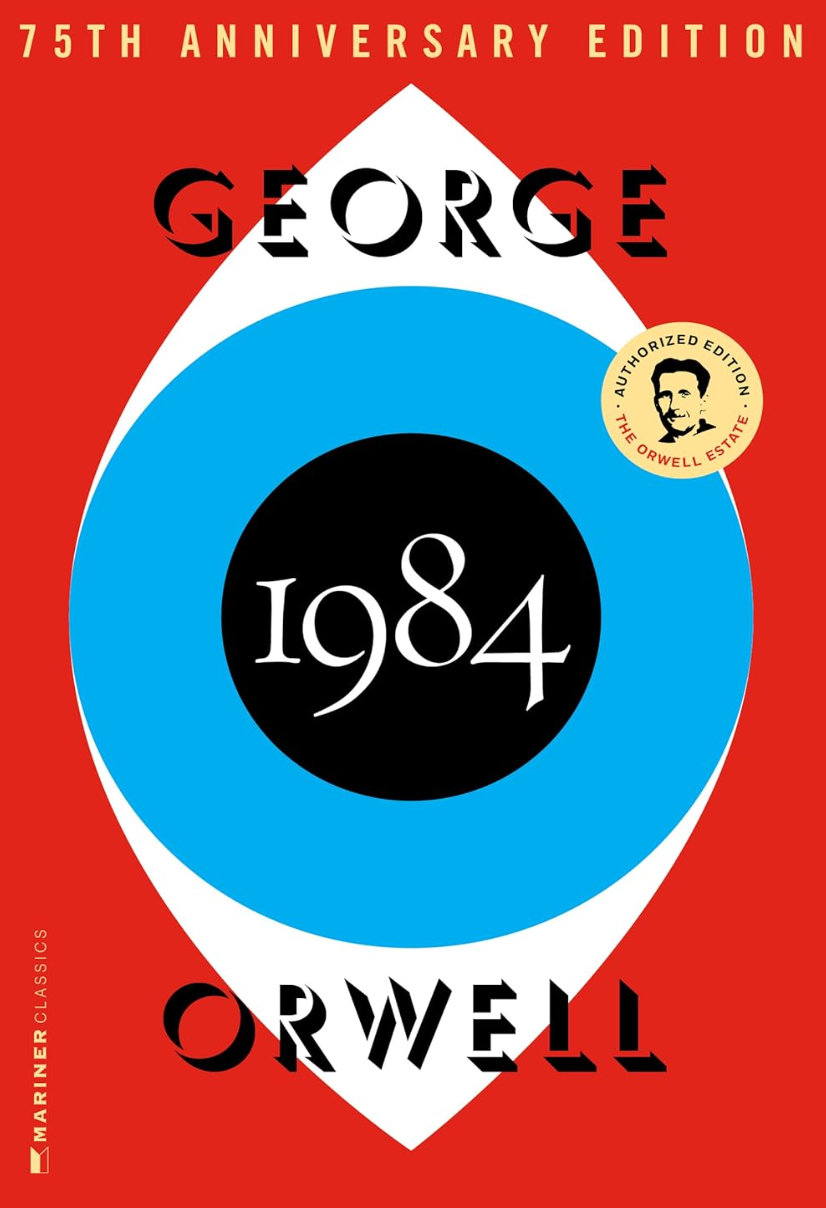
  8. George Orwell’s 1984 (1949)
    Orwell’s 1984 envisions a dystopian future where totalitarianism is taken to an extreme, with constant surveillance, government propaganda, and strict control over personal freedoms. Many concepts from the novel, such as Big Brother, Thought Police, and Newspeak, now feel strikingly familiar in an era of mass surveillance, data collection, and media manipulation. Technologies and practices Orwell describes, like surveillance cameras, facial recognition, and even censorship, are in effect in various forms worldwide. His work has often been cited in discussions about government overreach, privacy rights, and digital surveillance in the modern age.
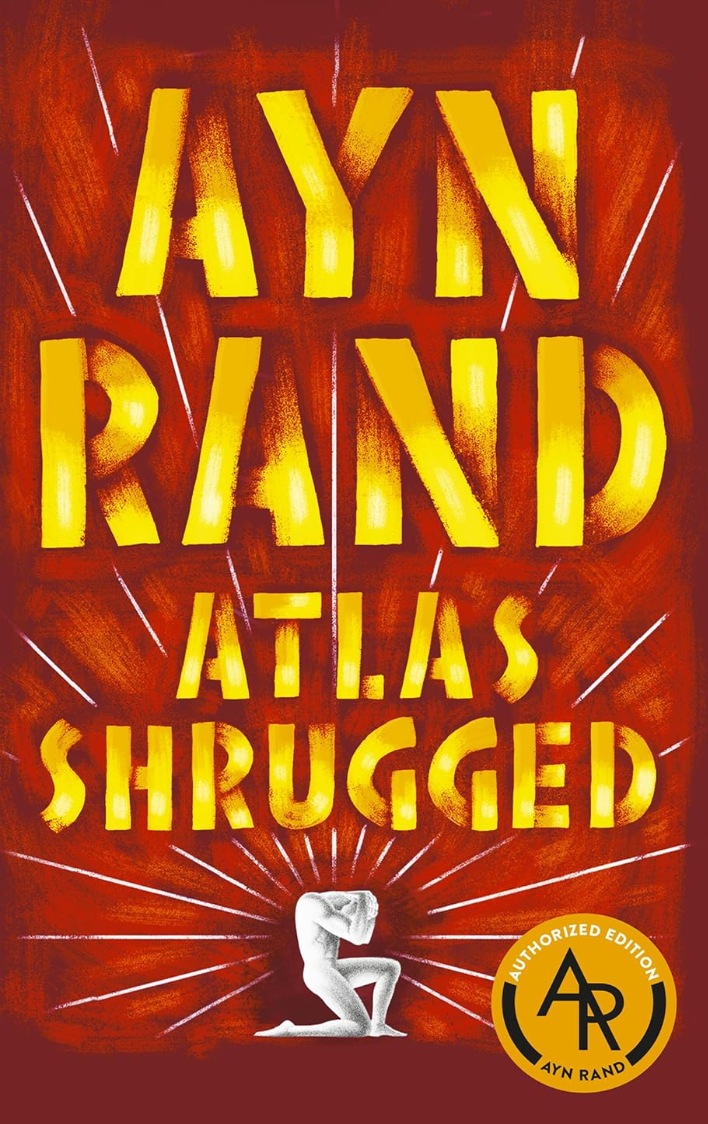
  9. Ayn Rand’s Atlas Shrugged (1957)
    Rand’s Atlas Shrugged presents a world where government intervention and regulation stifle innovation, leading to economic collapse and the eventual exodus of society’s most productive and creative individuals. While not a direct prediction, Atlas Shrugged resonates with real-world debates about government regulation, free markets, and the role of individualism versus collectivism. Concepts like entrepreneurial burnout, over-regulation, and the idea of “going Galt” (named after John Galt, a central figure in the book who withdraws his talents in protest) are themes that have found new life in discussions of government policy, innovation, and economic freedom.
  10. Arthur C. Clarke’s 2001: A Space Odyssey (1968), which he developed in parallel with Stanley Kubrick’s iconic film, is one of the most prescient science fiction works in terms of technology and space exploration. Clarke predicted or inspired several technological advancements that later became reality:
    • Artificial Intelligence (AI) and Voice Recognition
      The story’s AI, HAL 9000, is an intelligent computer capable of natural language processing, decision-making, and even emotions. HAL anticipated the development of AI systems like Siri, Alexa, and advanced voice recognition. Although HAL’s sentience and emotional intelligence remain fictional, modern AI and natural language processing have achieved many of the interactive functions Clarke imagined.
    • Tablets and Personal Screens
      The film depicted astronauts using flat, tablet-like devices to watch news and gather information. This closely resembles the modern tablet, and companies like Apple and Samsung have created devices nearly identical to those imagined by Clarke and Kubrick. In fact, Apple referenced 2001: A Space Odyssey during its patent dispute with Samsung, pointing out how the film showcased tablet-like devices decades before the iPad was invented.
    • Commercial Space Travel
      2001 envisions a future where commercial flights to space are routine, with a space station orbiting Earth and a shuttle taking travelers to a lunar base. While routine space travel for civilians hasn’t yet reached this level, we’re seeing a new era of commercial space travel with companies like SpaceX, Blue Origin, and Virgin Galactic making strides toward space tourism and lunar missions, bringing Clarke’s vision closer to reality.
    • Video Calls
      The movie showed video calling (such as when Dr. Floyd talks to his daughter from space), a concept that seemed futuristic at the time. Today, video calls are commonplace on platforms like Zoom, FaceTime, and other video conferencing apps, making this one of Clarke’s more immediate predictions to come true.
    • Space Stations and Moon Bases
      Clarke’s vision included a rotating space station and the prospect of human settlements on the Moon, both of which became more plausible after the Apollo missions. The International Space Station (ISS) functions as a multi-national, rotating habitat much like the one depicted in 2001, though on a smaller scale. Plans for permanent lunar bases are currently under development through programs like NASA’s Artemis mission.
    • Suspended Animation (Cryosleep)
      Although still in the realm of science fiction, Clarke’s concept of astronauts in suspended animation for long journeys remains an area of scientific interest. Researchers are actively exploring ways to extend human hibernation or stasis for long-duration space travel.

As you can see, all one needs to do is read Science Fiction to know that Time Travel into the future exists. Science Fiction is simply fact waiting to happen. And what better example of Time Travel into the future than looking at our current political climate. This election cycle was perhaps the most looked upon, global election of our time. The outcome of which will create U.S.A. 2.0. But I am going to leave that snippet for a later post and get back to time travel into the future, but as it relates to this election cycle.

Probably the most notable Science Fiction is George Orwell’s 1984. In a quick flyby. it involves a government over-reach (Oceania), a Super State in a constant war that may or may not exist, to corral it’s society in fear and distraction of Big Brother. Why this is not a mandatory read in our current educational system is because it was being played out in real-time. But with recent events in our political climate, in this version, Winston Smith will prove out that 2 + 2 does equal 4.

And what better, equally powerful, read than by Ayn Rand, because I can’t think of a more controversial figure who predicted the future so accurately. And what more controversial work of hers, but Atlas Shrugged. Read this snippet of Atlas Shrugged:

“I don’t know what it is that they think they accomplish—but they want us to pretend that we see the world as they pretend they see it. They need some sort of sanction from us. I don’t know the nature of that sanction—but, Dagny, I know that if we value our lives, we must not give it to them. If they put you on a torture rack, don’t give it to them. Let them destroy your railroad and my mills, but don’t give it to them. Because I know this much: I know that that’s our only chance.” She had remained standing still before him, looking attentively at the faint outline of some shape she, too, had tried to grasp. “Yes . . .” she said, “yes, I know what you’ve seen in them. . . . I’ve felt it, too—but it’s only like something brushing past that’s gone before I know I’ve seen it, like a touch of cold air, and what’s left is always the feeling that I should have stopped it. . . . I know that you’re right. I can’t understand their game, but this much is right: We must not see the world as they want us to see it. It’s some sort of fraud, very ancient and very vast—and the key to break it is: to check every premise they teach us, to question every precept, to—”

The Great Deception

As a writer of science fiction, I draw inspiration from the silent mentors of my past: George Orwell, Ayn Rand, Ursula K. Le Guin, and others. Like all writers of fiction, I hope to pass on something I have said that others will use as a compass for themselves.

Reading George Orwell’s 1984 for the first time in the 70’s was pure fiction to me at the time, but like all Science Fiction they are just facts not yet experienced. Getting older is thought to be a curse, but the curse is seeing more clearly than when in youth. You can’t ignore the past and expect a miracle outcome, only a failure to trip over it later in life.

Some of my favorite notable quotes from these authors:

“The further a society drifts from truth the more it will hate those who speak it” – George Orwell

“The people will believe what the media tells them to believe” – George Orwell

“We can evade reality but not the consequences of evading reality” – Ayn Rand

“There is no difference between communism and socialism, except in the means of achieving the same ultimate end: communism proposes to enslave men by force, socialism – by vote. It is merely the difference between murder and suicide” – Ayn Rand

“Lying is the misuse of language. We know that. We need to remember that it works the other way round too. Even with the best intentions, language misused, language used stupidly, carelessly, brutally, language used wrongly, breeds lies, half-truths, confusion. In that sense you can say that grammar is morality. And it is in that sense that I say a writer’s first duty is to use language well” – Ursula K. Le Quin

“Injustice makes the rules, and courage breaks them” – Ursula K. Le Quin

More quotes by these great Authors:

George Orwell

Ursula K. Le Quin

Ayn Rand