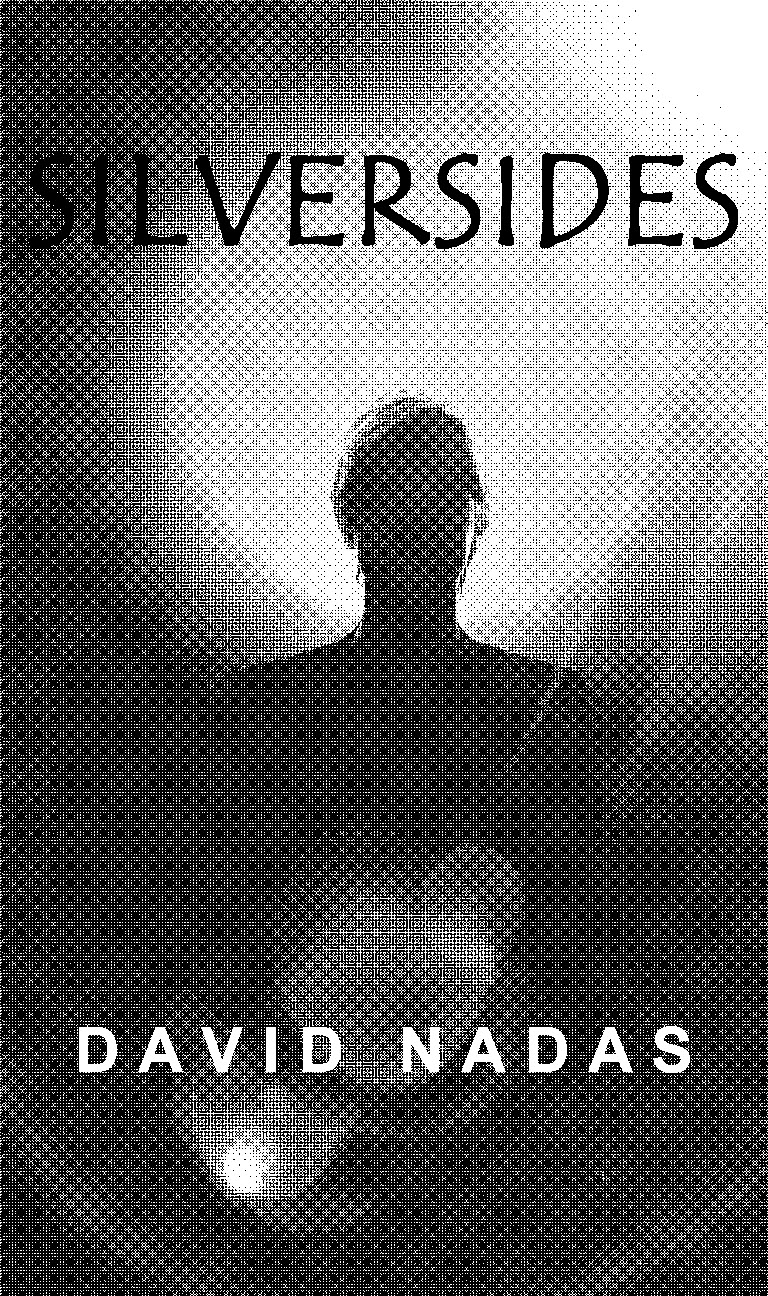
• SilverSides_CoverThis is a character study of Nori Matsui, the protagonist in my upcoming sci-fi novel, Silversides.  This particular excerpt may or may not make it into the second volume, but it is no less accurate of the events to unfold.

    Silversides: Excerpt – Exiting the Necker Cube

    “Nori,”  he said attempting to regain her attention.  He was speaking more softly this time, very controlled in a commanding tone he knows gets questions answered.  He waited for eye contact and brushed at his scalp as though having just walked into a cobweb.  “Who exactly are you?” and not waiting for an answer, “Where did you come from?”  Then leaning in,  “Tell us again, why did you come here?”

    Nori paid little attention to the talking suit, but instead focused on her cuffed wrists locked into the grommet of the table, which like her chair, was bolted into the concrete floor.  She studied the blue burn marks and scratches along the metal tabletop, wondering how many others had sat here to the drone of these same questions, whether they were a petty thief or, as she was, someone who had traveled twenty light years and back through time.   

    She raised her attention to the decorated suit with the port of his belly and chubby arms braced on the table, his manicured fingernails rolling inches away from her own.  How easy it would be for me to reach out and break every one of your fingers, she streamed into him.

    Without knowing why, he curled his fingers into his palms 

    “As I stated earlier,” Nori answered.  “I am here alone.”

    The suit pushed up and away from the table with the crack of his back the only audible sound in the concrete room.  He stood there, nervously massaging the folds on the back of his neck.  He hammered his fist onto the table and leaned in to where she could feel each puff of his words.

    “Stop fucking around and answer the goddamn questions!” the spittle from his charge landing on her cheeks but her eyes never blinked.

    Nori had been mouthing word for word of what the suit was saying, her blue left eye and green right eye, unnerving him as she did.

    When he saw the slight extension of her smile, he lost it.

    She knew what was coming and took the blow of his back-hand across her mouth, pausing briefly for the effect before sweeping her tongue beneath her lip, watching him shake off the hurt like he had just punched a brick wall.  He could see there wasn’t a mark or expression on her; just the feeling of deep hatred streaming into him.

    “CHIEF!” Shouted a woman’s voice from behind as she stepped out from the shadows. “That will be enough! Now leave us or–by God–I will see to it you spend the remainder of your career at Shemya!”

    Knowing she did not hand out threats, only promises, he turned away from Nori to face his Commander-in-chief.

    “Madame President,” The Chief Executive Officer acknowledged with a submissive nod, then he turned to the the Marine standing at attention, who opened and closed the steel door behind him.

    The president asked for a chair and sat opposite Nori.

    “I deeply apologize for my Chief’s behavior….  Inexcusable,” she said with disgust. “I assure you, that will never happen again.”

    Nori did not respond, nor did she care.

    The President felt something slip over her and brushed the flip of her hair.

    “Tell me.  Why did you come here?  Why Times Square, the most recognizable place on this planet?  Surely, you could have picked someplace more hospitable, say–“

    “Paris?” Nori said finishing her thoughts.

    “Yes… Like, Paris…” the President reiterated, her throat suddenly dry and her alarm apparent.

    “I thought about that…” Nori paused. “Paris will always remain a place of inspiration for me, but New York?  New York seems right… So here I am, Times Square… The center of the Universe.”   Nori could feel the hidden fright of the President, having just read her mind.

    “You need to shut down five-eighty-one,” Nori cautioned.

    “What is five-eighty-one?” the President questioned, the chevrons on her forehead lifting and indicating she was clearly in the dark.

    “Start with your Chief,” Nori suggested.  “He’ll be sitting in your seat…”

  • I’ve said this before… I now understand why all extraterrestrials come to Earth…. So their authors do not have to invent anything.  As a new writer of sci-fi, I had hoped into my starship, skipped across the galaxy at .5 light-speed, landed on an exoplanet of my choosing… and came to a screeching halt.  SHIT!  I have to invent everything from here on out….. Noooooo!

    Fortunately for my WIP I have a strong background in technology, biology, marine sciences, ecology, and animal behavior so I had that part down, but the language thing?   … That was not going to be tackled very easily.  On one hand, I needed to convey my protagonist and crew were on another world, interacting with an alien civilization, but on the other, I did not want my readers choking on a language syntax because I had no idea what I was doing.  I cleverly got around that barrier but Then I came across an article on NPR about a guy (David Peterson) who does just this–invent languages.   I listened to the interview (great), then searched YouTube for some virtual face-2-face time and got pointed in the right direction.  Next Sci-Fi… I’m not leaving home…..


  • I am pleased to announce the release of my new novelette:  From Europa With Love – Kindle version available for download on OffWordlers.com (Free) and Amazon (.99 cents)

    Shuttle Captain Kulcin Black follows a distress signal back to Europa but there is no one there to pick up. On return, he discovers he is not alone.

    When events in space go from bad ot worse. This is not a love story.
    A new scifi from the author of, November Seed


  • If you are a writer of sci-fi and have traveled to other worlds, as I have, then arming yourself with a visual aid of the weather can add drama to your work.  I recently discovered a fantastic site called Earth NullSchool.net (by Cameron Beccario) and I can’t stop looking at it.   The graphics are mind-bending and served up through supercomputers of near-time data.  It is kinetic art, to say the least.

    During a recent Atlantic storm (Joaquin) I was able to compare the weather outside my window with the projections on this site.  I would look up and study the sky: its clarity, clouds, their direction, then compare it to what I was seeing on these projections.  Up until studying this site, I would just look out my window–through the atmosphere–now I look at it.

    I have been working on a novel, Silversides, for a few years and I am pouring my knowledge of real-world science into each edit.  It takes place on an exoplanet twenty light-years from here and therefore I have to invent everything.  But after exploring this site, I realized there was one area I was not paying much attention to, and that was the weather.  Sure, I had storms and rain and clouds and sun, but looking back, they were merely adjectives and adjectives from a storybook perspective.

    My work reads differently now, much differently.  You feel it.  You feel the shuttering of the craft as it enters low orbit, the pilots trying to stabilize in vitro, their skill with simulation no longer relevant in these atmospheric anomalies.  And below them, skimming over open ocean the waves are building, driven hard by the fetch of winds over greater distances than on Earth where they feel the compression of air at each crest….Joaquin

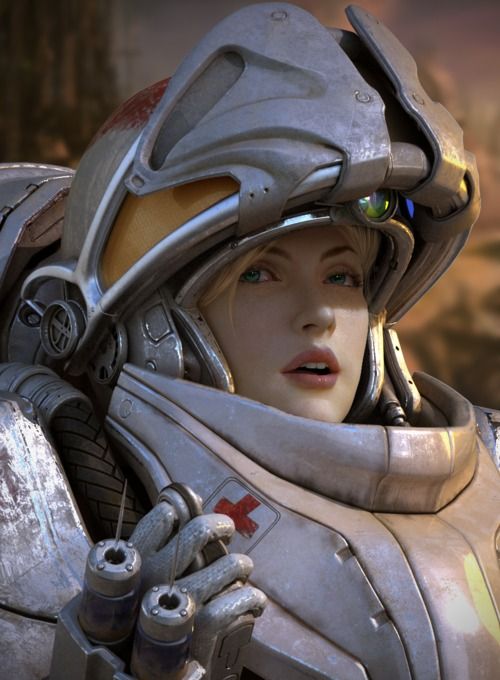
  • Starcraft Medic by Kim Yong SuYou see this type of writing, often, in new writers, like myself.

    He was afraid to look up at her, but when he did, he was surprised at how easy that was.

     Yikes! Is right.  That was written without the experience of it.

    You can improve your writing dramatically when you learn to role-play.   So put the laptop or keyboard to the side and stand up. Get into your character’s head and look down at your feet.   Now pretend he or she is standing in front of you. Lift your head.

    How were you standing?  What did you see?  What were you feeling? Was it something like…

    He was afraid to look up, his gloves placed neatly by his side, his focus on the single blueberry shaped stone that rolled beneath his boot.

     Now look up, idiot, before she leaves, he told himself.

    She was slight, with thin ankles disappearing beneath the cuffs of her EVA that, like her eyes, were a pale blue. To his surprise, her parted smile made him feel, at ease. There, that wasn’t so bad. Now say something…

     “Hey…” he said without thinking… There, you said it… his shyness slipping further away…

    Ok, so aside from the wordiness, you now see and feel what your character is experiencing and you conveyed that to your readers.  Trim it. Print it.

    I often do this when I don’t quite feel the writing is expressing what I want it to. For anyone watching me, I might look a bit crazy, typing away then suddenly stop… get up and walk to the other side of the room, relax, shake out my arms, turn around and start to walk back, as if my character is entering the scene. Try doing that at a Starbucks… LOL. I write at home these days…  Eventually, you will need to do less of this as the writing improves. But there are always times you should express this type of role-playing, no matter how good you think you are.

    I am in the editing phase of a sci-fi novel which takes place twenty light years away in the solar system of Gliese 581, specifically on 581 g, a planet in tidal lock orbit around its sun—a red dwarf, dimmer than our own. I had always been a bit leery of my expression of the lighting, trying to get across what being on the surface of Gliese 581 g would be like. Sure, pictures help, but how do I experience that?  Do I try writing in the dark or wear sunglasses?

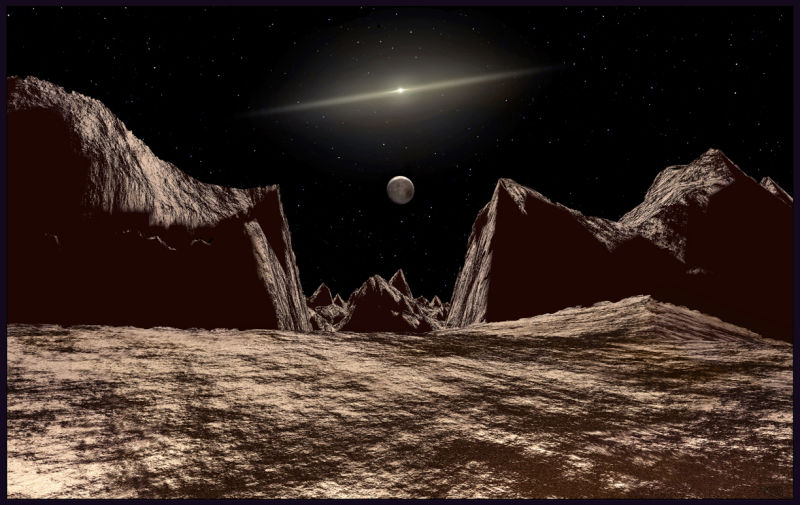
    Pluto_Surface_light_2It was not until I read a post on www.io9 about an artist rendering of what it would be like to sit on Pluto and see what one might see—our sun a pinpoint in the distance. One of the replies to the post questioned the artist’s licensing of how much light there would be. Instead of knocking the artist’s judgment, that clever person did some research and found a NASA site, called Pluto Time.

    Pluto_Timewhere you plug in your location and it tells you what time of day you should go outside to see exactly what the brightest part of a day on Pluto would look like. So I did. I plugged in my location (NYC) and it spit out that my optimal viewing time would be 6:54 PM on September 24th, 2015.  This type of role-playing I think will provide the needed perspective in my editing.  It does not have to mimic exactly, but I hope to have an experience to recall what that was like, pretending to be on Gliese 581 g.

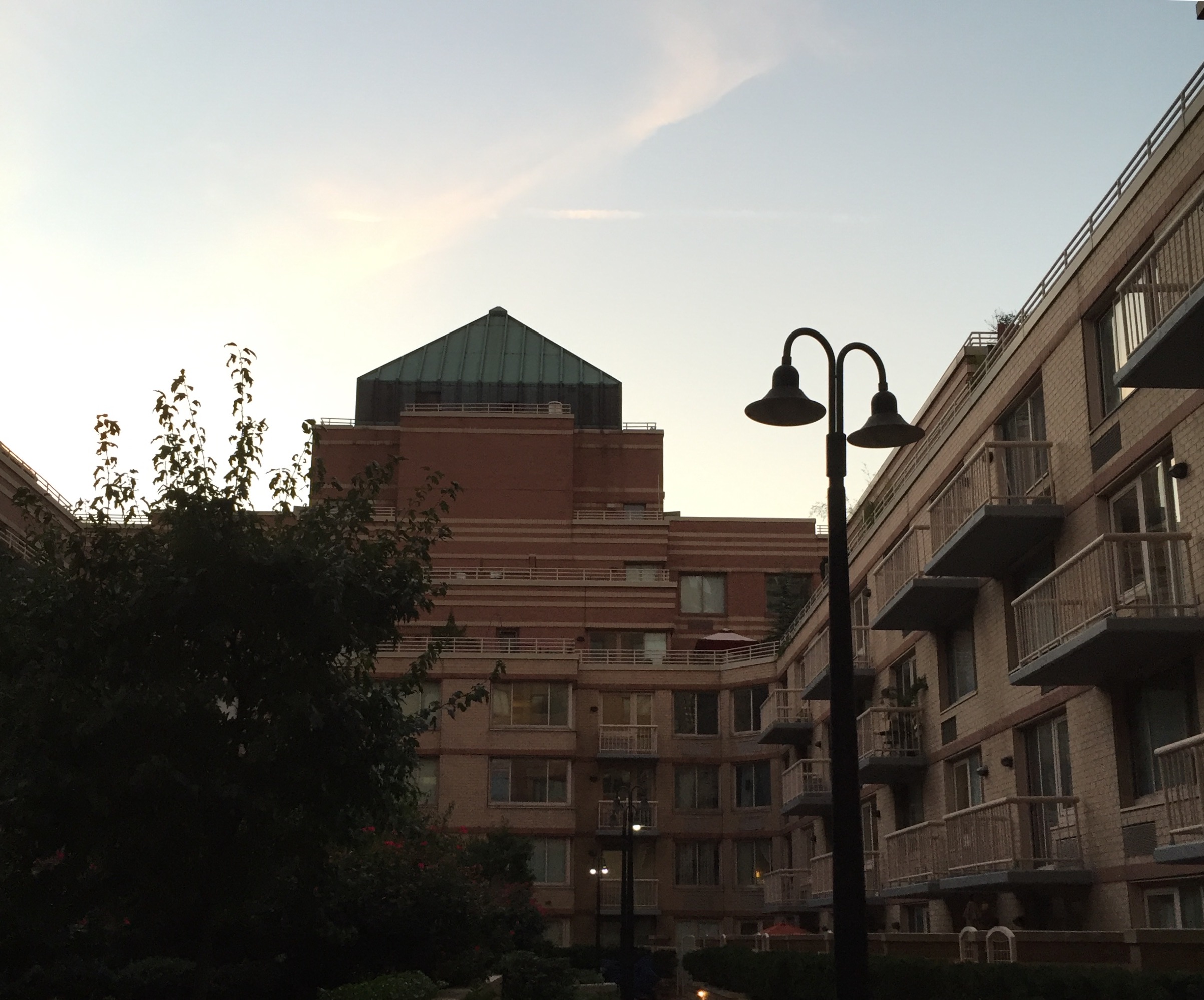
    PlutoLightSo, as my Amazon Echo announced my alarm at exactly 6:54 PM, I stepped outside my city apartment and had a look and walk around.  Not bad.  I could see easily and it was a beautiful evening sky, everything seemed to have this softness to it, an attribute I had not considered.   I cannot stress how valuable this experience was for me, as I now trail behind my characters, following them on their trek and seeing what they are seeing. Costumes, optional.

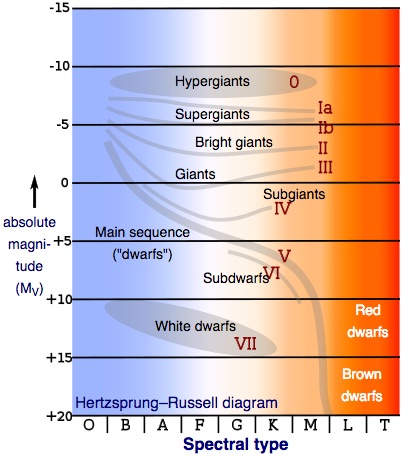
    SpectralTypeFor any AstroProgrammers out there reading this, it would be great to take the Pluto-Time model and expand it for other star-types, etc.  For example:  You select from a series of dropdown menus a star type and distance away, and it asks for you to enter in your location and it spits out what time of day to go outside, which closely resembles what the lighting might be like. 😉


  • Sci_Fi_ReviewsFirst, there are no spoilers here, so read on. I finally got around to watching some sci-fi flicks that were on my watch list.

    The Frame:   This could have been made into a series.  I soaked up the characters, played by Tiffany Maulem & David Carranza and felt their every emotion.  What a great twisted version of the Truman show.  The music track to this film is by the hauntingly beautiful sounds of Jamin Winans.

    Under the Skin: This is a Stanley Kubric Clockwork Orange with Aliens; a beautiful alien (Scarlett Johansson).  Brilliant in minimal dialogue carried on the vertebrae of visual artistry.  I Loved it.

    Traveling Salesman: A thinking person’s sci-fi played by excellent actors: Danny Barkclay, Tyler Seiple, Eric Bloom, David John Cole & Marc Raymond.    Discusses the P = NP equation.  Slow moving, but conceptually riveting from the standpoint of contemplating the opening of Pandora’s Box.   Might be hard to get through for most, but if you are writing a sci-fi about computer espionage, there are some essential theories here for you to get it right.

    The Bothersome Man:  An interesting, if not poignant view of heaven as a possible  franchise—I never thought of it being that way, but why not.? We live and breathe in the franchises of our culture, so why can’t heaven be the same way?   I’m not sure what to think about this one.  If I were writing this, I would have taken a different path; however, something may have been lost in translation for me (Norwegian).

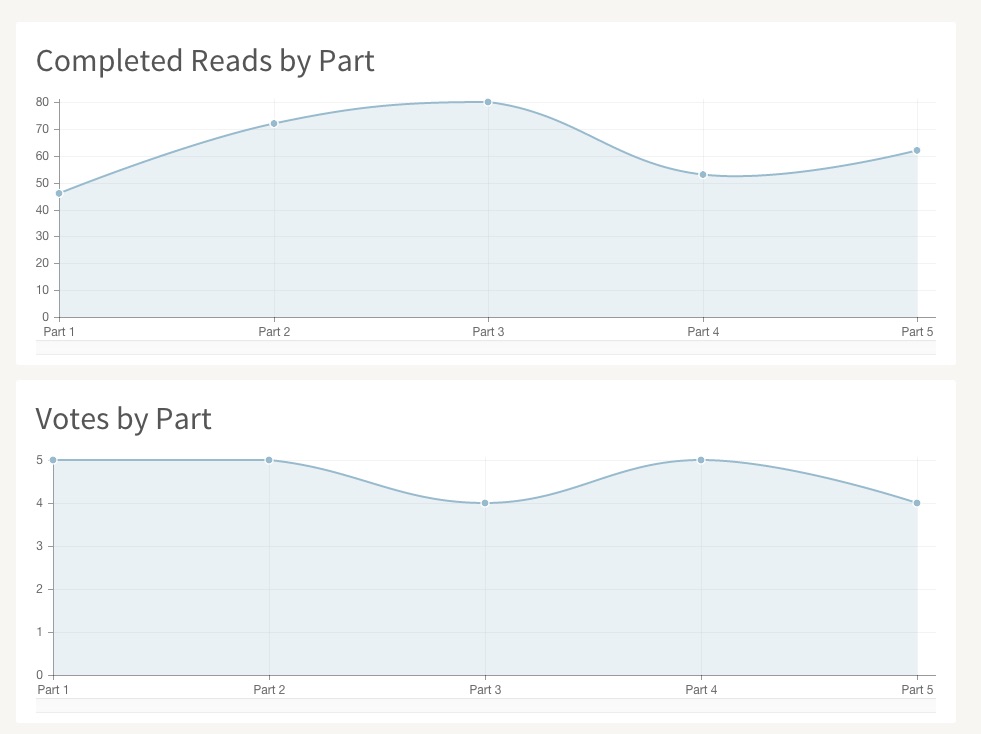
  • Metrics_AHere is a good visual tip on how your W.I.P is being received. It’s a great way to see where you might have some stalling in your storyline and where the peaks and valleys are. I am going to use this from now on.

    I am using WattPad.com as a proving ground. There is great readership here and the feedback is always helpful and constructive. When you post your work, you can view the metrics of that work. I am finding it helpful to know where to place chapter breaks or what sections I might need to inject a bit of excitement or build character. If you see your readership drop significantly after the first part, you know you need to do one of a few things: Start out running, or become a better writer (LOL).Metrics_C

    Here is an example of a short story I wrote, called “From Europa with love.” I divided the story into five parts to see how the sections were being received. The feedback was awesome and exactly what I would have predicted. You will notice that readership starts to wane after Part 3 (but by then I already had a good following to this short). This feedback was so informative to me, because part 4 is where the storyline shifts and part 3 sets up for that. The graph was spot on to what I would have expected. I think I need to go back into part 3 and set a few more hooks.  I will definitely use this methodology for my novel.

    Metrics_B

    I’m a believer.

  • SolarFlareOne of my favorite topics at the dinner table, these days, is when the subject of disasters comes up.  I immediately refer to the Carrington event of 1859.  Having one of these today would bring almost everything we know, to a standstill, but serve as a great equalizer to 3rd world nations.

    A study by Lloyd’s of London has concluded that if an X class storm the size of the Carrington Event hit us today it would take a $2,600,000,000,000 chunk out of the global economy, and would take up to a decade to repair the damage.  It is going to happen at some point; the only question is when?

    It is estimated that we would have between 12 and 17 hours before it would hit, which is not much time to get our S**T together.  One of the interesting aspects of thee types of events, that determine speed, is if there were previous and closely related flares before it–sweeping a path and adding to it, the way waves can compound.  Needless to say, it seems like a comic game of Russian Roulette we play as our planet dances around the sun.

    The Solar storm of 1859, referred to as the Carrington Event

    SPECIAL NOTE to users of Wiki:

    Today (7/29/2015) Every Wiki age will have a splash screen for donations to keep this natural resource free of ads.  As a writer, take the time to donate– at least $3 (credit card, PayPal, Amazon) to Wiki, where many of us start our research for our W.I.P.

    I have started a short story titled, 12 Hours based on this event, today and it only cost me $5 😉


  • FutureWIKIIf the game of golf has been said, ‘as being a beautiful walk, interrupted.’ then the isomerism can be said about surfing the internet ‘as being a walk beautifully interrupted.

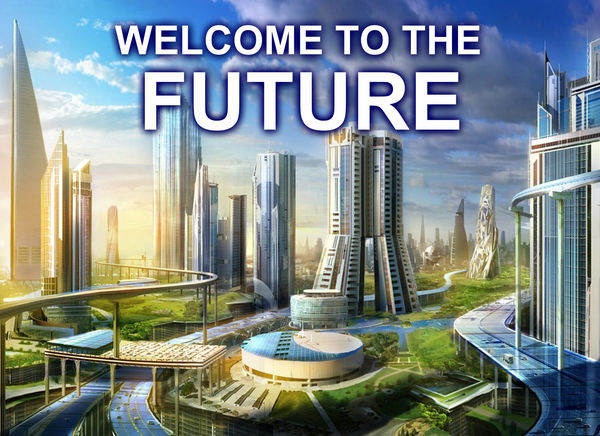
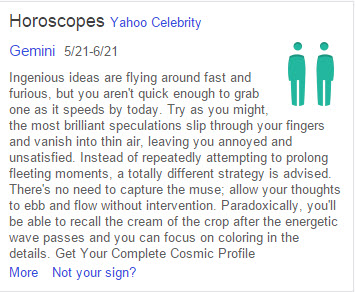
    I was conducting research for my Work In Progress (Silversides) and found a wiki post that was exactly what I was looking for (artificial gills), but something was off;  I was reading a post taking place in the future and It freaked me out. I looked up at the URL and saw I was on a site called wikia (future).  Wow!  This was so cool and my mind was racing–so weird because my yahoo horoscope for the day(Gemini) predicted this would happen.

    GeminiHoroscope


    I had all these ideas pitching by me, so many it was like trying to grab at dandelion seeds in a breeze, where reaching toward them provided their evasiveness and at the end of it, I was left with nothing in my hands and only ideas.

    So here is how I see this spectacular site useful to sci-fi writers: 1) Research for your sci-fi writing; 2) A one-stop-site to park new terms, ideas & concepts for sci-fi writers to create the future by using, in their works, this library–why invent terms if a good one already exists; 3) Like wiki, your posts can be the forward or a snippet of your story (making sure it adheres to the guidelines and does not read like a self-promotional ad), yet promotes your work; 4) That the concept of this site would make for a great sci-fi itself, where a destitute protagonist stumbles across a URL somewhere between the intra and dark net of tomorrow’s news (modern take on the protagonist finding a newspaper of tomorrow’s news, with a twist–this automata is self-aware).

    I’m sure you all can add to this–I need to get these ideas spinning through my head down on digital before my muse steps over the threshold of my consciousness.

    To enter the future, click here: http://future.wikia.com/wiki/Main_Page


  • BigRipA rocket science friend sent me an article posted on the BBC, titled: “How will the universe end, and could anything survive. “ The article contained some known (Big Crunch, Inflation) and unknown (Heat Death, Phantom Dark Energy) concepts to me. But reading through all of these got me thinking: how many sci-fi works have been written about the end of the universe or at least close to it all ending? The answer is, quite a few.

    • H.G. Wells: The Time Traveler
    • Isaac Asimov: The Last Question
    • Frederick Pohl: World At The End Of Time
    • Poul Anderson: Tau Zero
    • Federico Campagna: The Last Night
    • Charles Sheffield: Tomorrow and Tomorrow; Between The Strokes Of Night

    These are to name a few, but here is a link, where I found these and more:

    http://boards.straightdope.com/sdmb/archive/index.php/t-469845.html

    I might just have to write one, a short story, involving….. well, I will keep that one hidden for now, but I like what I’m thinking.