
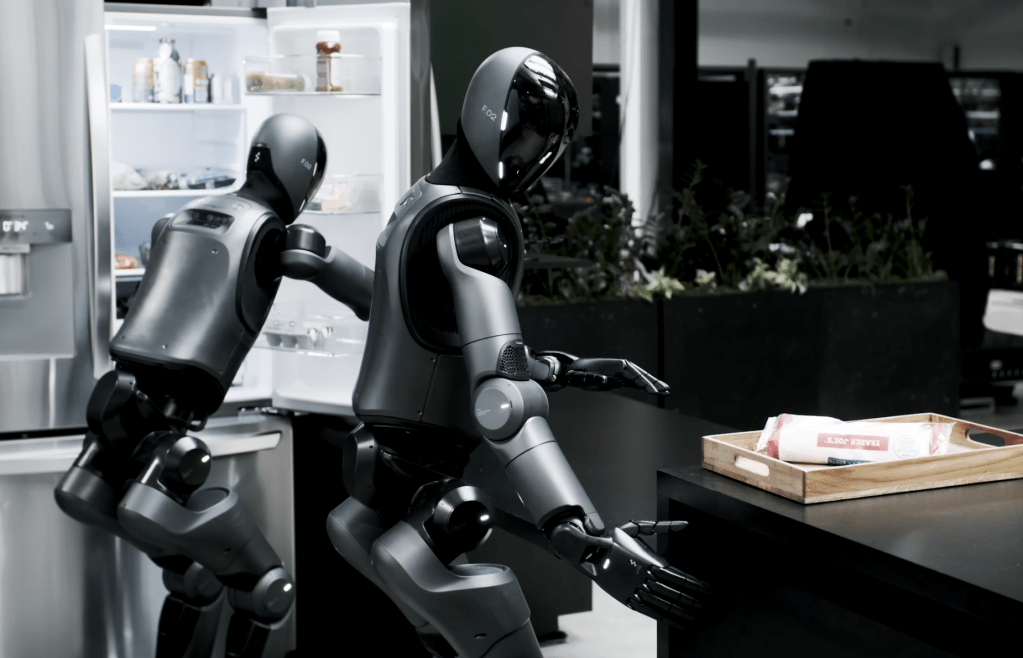
Isaac Asimov’s The Robots of Dawn presents a vision of intelligent, humanoid robots integrated into society, raising questions about ethics, autonomy, and the boundaries between human and machine. Fast-forward to today, and we see real-world counterparts emerging in unexpected ways.
The, now, $1,000.00 Roomba, once seen as a novelty, now quietly symbolizes the normalization of domestic automation. For just a few hundred dollars, people can own a robot that navigates their homes, mapping spaces and cleaning autonomously — a concept that once seemed futuristic.
Tesla’s Optimus represents the next leap — a humanoid robot designed to perform complex physical tasks. This marks a shift from specialized automation to general-purpose robots capable of integrating into human environments. Recently, Tesla CEO Elon Musk made a startling claim that humanoid robots will surpass the human population by 2040, possibly over 10 billion robots. Sound preposterous? At first, but robots are not necessarily these metal and plastic devices, they come in the form of software (Alexa, Siri, Gemini, Grok, ChatGTP) or just an arm on a stand to make fries or flip burgers, clean up trash along roadsides, or carry things, clean, cook, pay your bills, etc. If you think this way, 10 billion might be conservative.
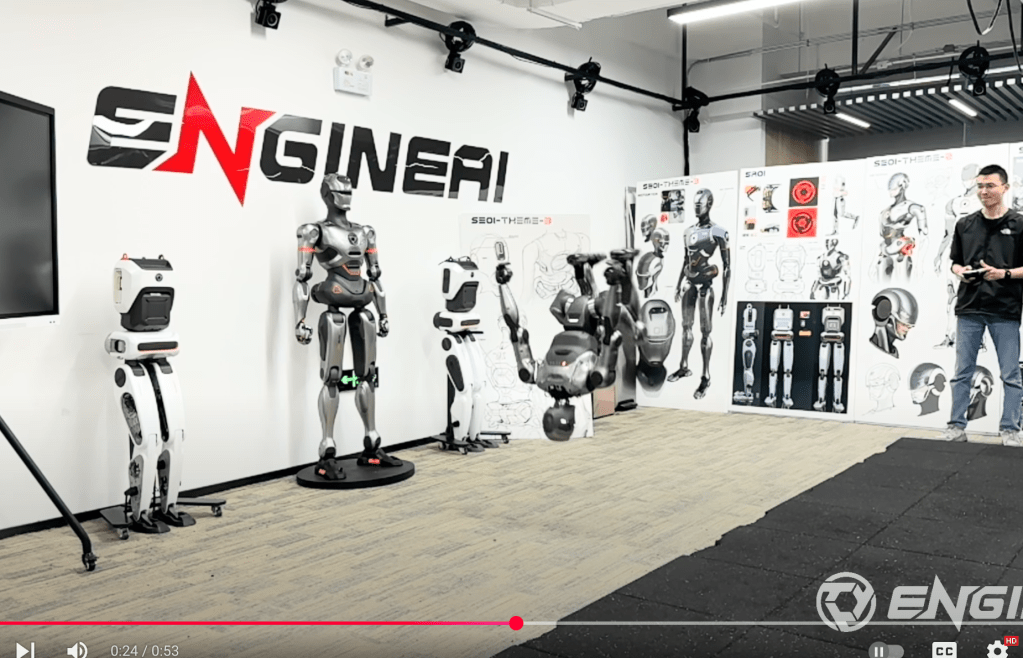
Meanwhile, in research labs and startup workshops, countless other robotic innovations are quietly taking shape — from automated delivery systems to caregiving assistants to military-grade drones. These developments, often overlooked until they reach mass adoption, can feel like a sudden wave of change.
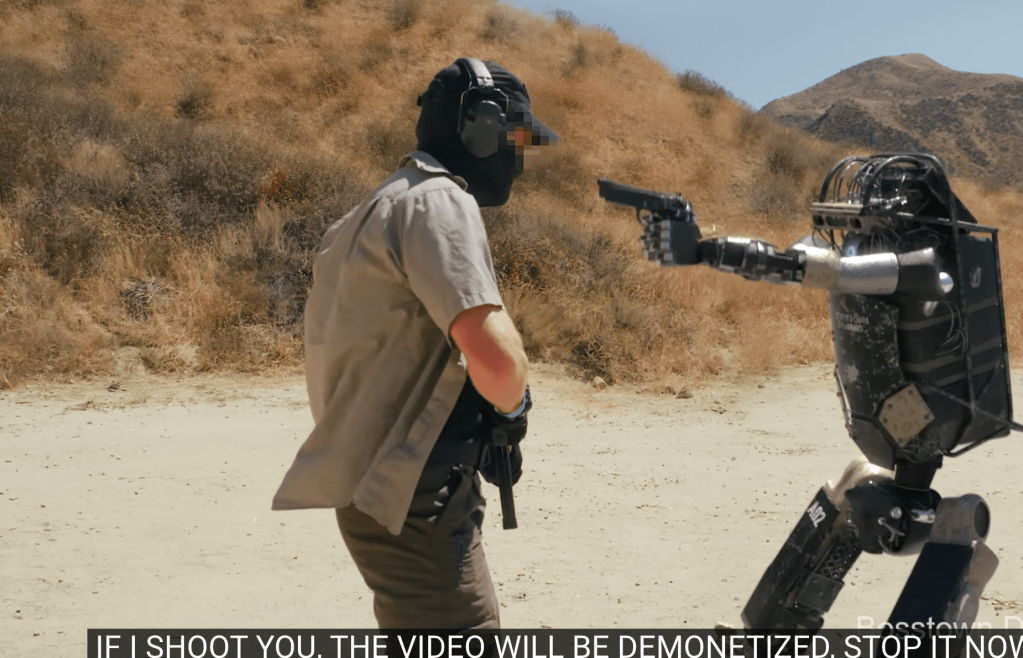
Then there is the military side of Robotics, and it looks disturbing. I cannot help but think of SkyNet, from the original Terminator. With Sci-Fi just being fact before it happens, this is something that actually worries me.
There are so many current Robotic developments occurring in the Military from robotic dogs with mounted machine guns, to legions of robots that can fight 24 x 7 to flying drones that hover and observe while others close in on a human target for detainment or termination.

The phrase “When did that happen?” captures this societal dissonance — the sense that technology often feels like it’s arriving overnight, even when it’s been brewing for years. Just as Aldous Huxley’s Brave New World depicted a society reshaped by science, we are witnessing an accelerating transformation that challenges our understanding of labor, privacy, and social dynamics.
So lets come back to the softer side and hope that Isaac Asimov’s Three Rules of Robotics hold true:
- A robot may not injure a human being or, through inaction, allow a human being to come to harm.
- A robot must obey the orders given it by human beings except where such orders would conflict with the First Law.
- A robot must protect its own existence as long as such protection does not conflict with the First or Second Law.
But my bet is on the Adult Industry. Why? Well, the Adult Industry was the first industry to become profitable on the Internet. The Adult Industry has often been an early adopter — and sometimes the driving force — behind emerging technologies: The adult industry pioneered secure credit card transactions on the internet, driving early e-commerce innovation. Adult content creators were early adopters of VR technology, pushing hardware development and immersive experiences.
introducing Arya by Realbotix. While Ayra is marketed as a companion robot, her capabilities naturally extend to intimate scenarios. For individuals with social anxiety, physical disabilities, or those seeking companionship without emotional complexities, Ayra represents a deeply personalized solution. Although her current mobility is limited to a rolling platform, I don’t think it will be two many gens away from walking on her own.
Some may find this offensive, and like all emerging technologies there will always be the warped, the squeaky wheel that leaves a bad rep on this advancement. However, my thoughts are that what is lacking in the most advanced cutting edge of Robotics is the intimacy factor and I am not referring to sex, but the bedside manner. If history repeats itself, the Adult trade’s early adoption of Ayra-like robots could lead to breakthroughs in AI personality development, conversational depth, and emotional simulation. Over time, these advancements could reshape not only intimacy but also caregiving, mental health support, and social companionship. that can be adopted in the Healthcare industry for Healthcare, In-house care, Hospitals and Hospice.





 David Nadas