
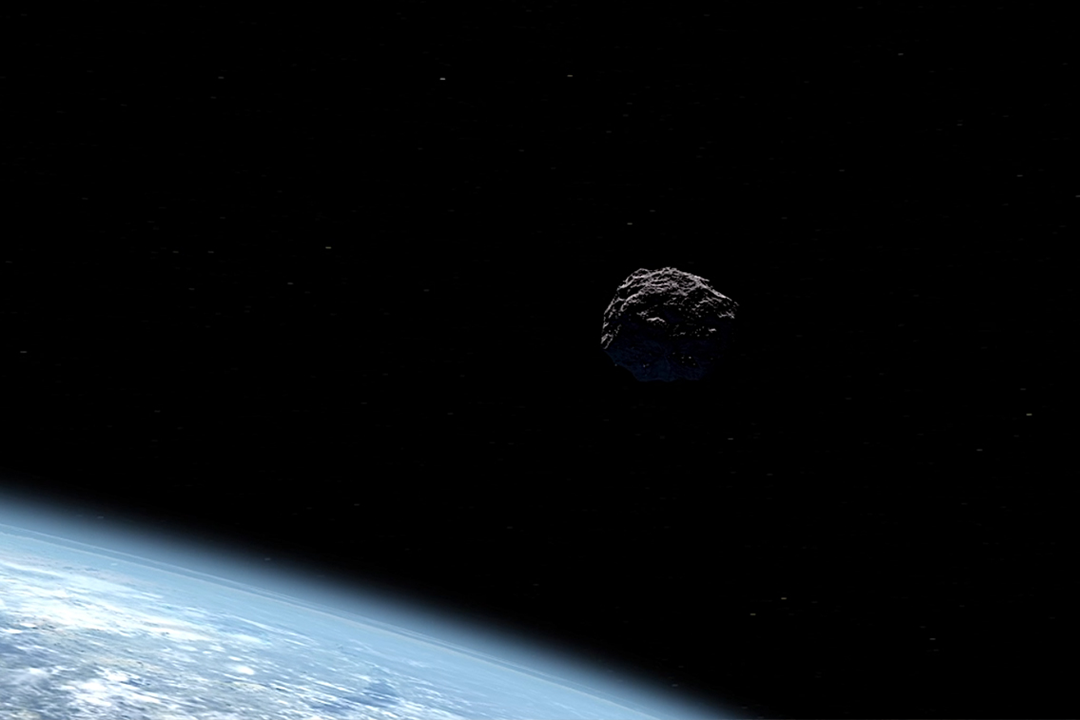
On April 13, 2029, the asteroid Apophis (designated 99942) will pass within 20,000 miles (32,000 kilometers) of Earth—an incredibly close distance in astronomical terms. This asteroid is about 1,100 feet (340 meters) in diameter.
NASA assures us there is no risk of Apophis impacting Earth for at least the next century (really). If you’re curious, NASA’s website offers live tracking of the asteroid’s current location, which is definitely worth checking out.
Still, when it comes to asteroids, even a near miss can feel unsettling—like playing horseshoes, where close counts.
To put the distance in perspective: if we were to unravel Earth’s circumference (about 24,000 miles) into a straight line, it would stretch 4,000 miles beyond where Apophis will pass. For further context, geosynchronous satellites orbit 22,000 miles above Earth’s surface—2,000 miles farther than Apophis’ path—and there are roughly 400-500 such satellites currently in orbit.
And here’s an interesting coincidence that NASA doesn’t mention: Apophis will make its closest approach on Friday, April 13th. Yes, Friday the 13th. And then you need to consider the name, Apophis, the ancient Egyptian god of chaos and destruction….
For a thrilling and thought-provoking read, check out Red Lightning by John Varley, if you can find it (out of print). In this science fiction novel, a massive, unidentified object skips past Earth, initially feared to be a weapon but later revealed as an asteroid. Although it didn’t collide with the planet, it came close enough to generate a shockwave that grazed the Atlantic Ocean, triggering 300-foot tsunamis that devastated the Eastern U.S. coastline as well as parts of Europe and Africa. It’s a gripping story that blurs the line between fiction and reality—reminding us that we are all in a game of Galactic Roulette.


 David Nadas