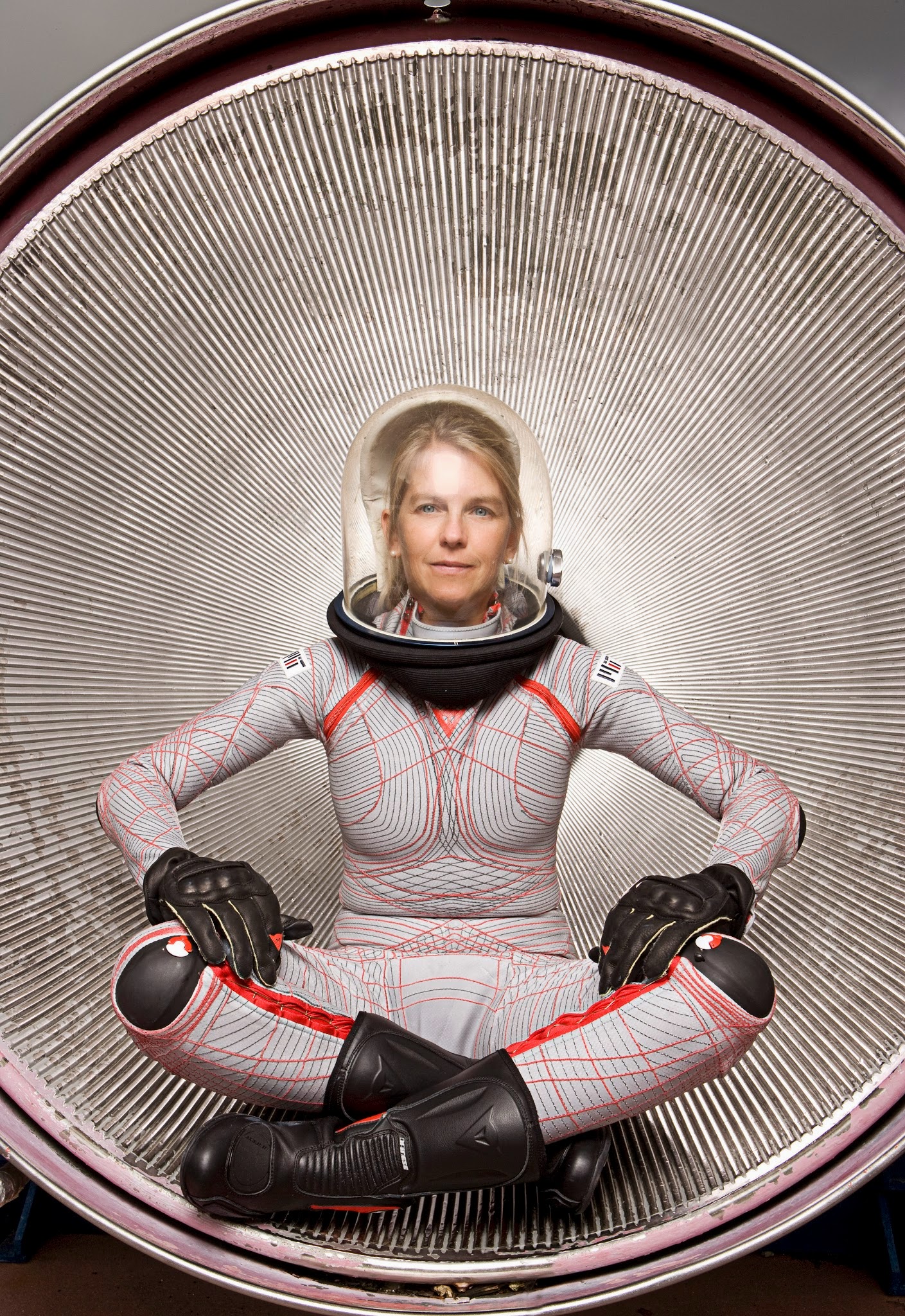
• davaI was reminded by a G+ post, by Ralph Roberts, of the brilliant Dava Newman and her recent appointment to NASA.  

    When writing Sci-fi, think about what your characters are wearing, in space.  I had viewed a TED presentation by Dava Newman, of her work, on EVA design.  It was such a valuable visual for me during a recent series I wrote called Kulcin’s Law, avalable on www.Offworlders.com.  These were the suits I envisioned my astronauts were wearing, becasue I wanted them to move effortlessly and not have to explain getting in and out of their EVAs.  Below is Dava’s TED talk.

    Dava Newman on TED


    Then, when your crew gets to their destination, you might want to check out the latest fashion ETs are wearing these days:  Check out these possible Sci-Fi fashion statements.


  • I had just finished writing a sci-fi serial on OffWorlders.com called, Kulcin’s Law, where most of the story takes place in Jupiter’s realm, with several flights in and out of Europa’s orbit.  I missed a bit of detail that would have been a nice morsel to the hard core readers and that was a simple line taking into account the ship’s roll on approach.

    This gif taught me a lesson, that even though I can’t go there, my mind can.  Don’t miss the little stuff.

    Click on this animated GIF of Saturn and see what I am referring to.


  • For those of us writing about distant planets, the question always comes up, how real is this going to be for my readers?  I am faced with this exact question in my current work and I want it to be as plausible as I can make it.  So after watching this fantastic lecture by Sara Seager, I now have some real science to weave into my WIP.

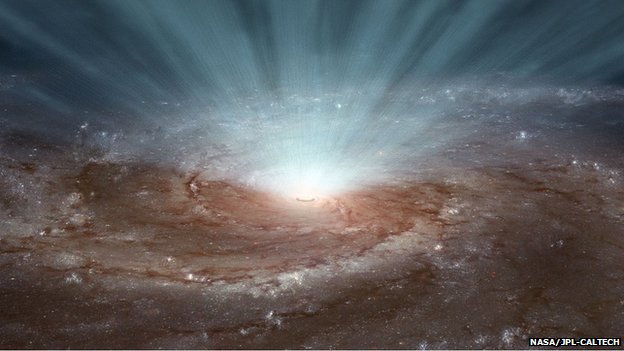
  • Above is a simulation of the gravitational lensing of two orbiting black holes by the SxS group or research scientists.  I stumbled upon this site (Simulating Extreme Spacetimes) , which was put together by multiple institutions for research on black holes, neutron stars  and other extreme events ‘To better understand Relativity and the physics of exotic objets in the Cosmos.‘  The work put together here is information rich, especially for the hard core Sci-Fi writer.  Explore their Glossary, simulations and a favorite, Sounds.   Surf their site for the plethora of links to make your writing a good read.


    This is a great one-stop shopping site for my works in progress

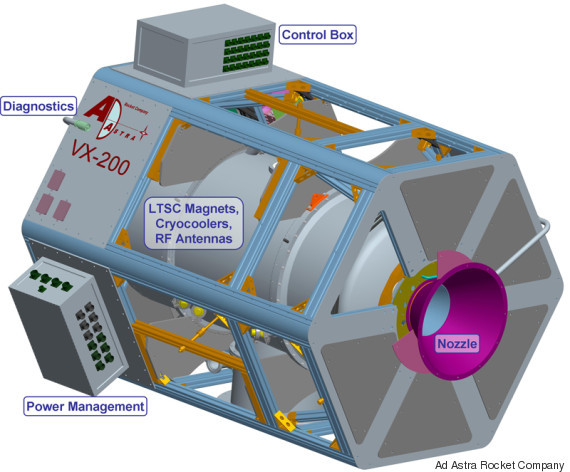
  • As a writer of hard sci-fi, getting the science plausible is important and traveling through the solar system at conventional speeds has been a problem, until now.

    Here is some tech to make that transit, plausible; granted, the VASIMR needs a few hacks, but nothing a sci-fi writer can’t do in their sleep.

    Read the full article by clicking here.

    VASIMR


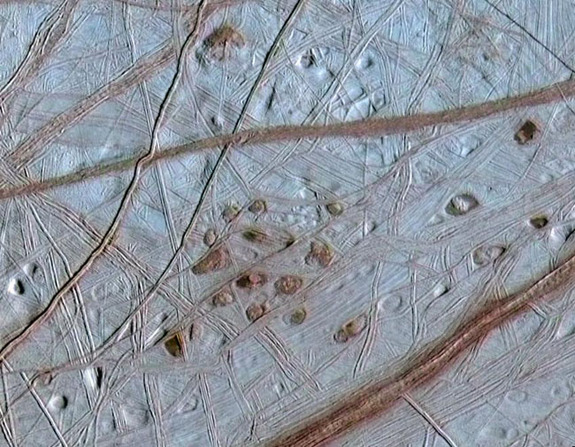
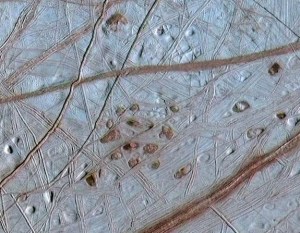
  • EuropaScratchesWhat started as an exercise in writing, became a sci-fi series on OffWorlders.com – one that I began to really enjoy.  I was not sure where this was going, until Part III and the timely reading of a post on what life in the sub-ice oceans of Europa might be like.  You can view the series by going to OffWorlders.com, or clicking on the links below.

    While on Offiworlders, enjoy other sci-fi authors contributing their talents to this upcoming popular sci-fi slice of the universe.

    Q & A about Kulcin’s Law:

    Q: Where did the name Kulcin’s Law come from?

    A: I am embarrassed to say, but I saw a leading Yahoo post on Macaulay Culkin, and thought, What an odd name.  So I warped it into Kulcin’s Law.. yes, it’s true.  I needed a name and that seemed as good as any.

    Q: Why did you start this series:

    A:  Not often, getting long periods of time to write during the week, shorts are a great way to hone one’s skills.    I entered a one page sci-fi competition, on-line, that had to involve Jupiter’s moon Europa.   I had one reviewer say he wanted more, and that is all it took.

    Q: Do you see this evolving into something more?

    A: Probably, but it will need to stay a short story for now.  I have so many great ideas waiting for me, on the shelf,  but need to get out what I promised, Silversides.

    Q: Where did the storyline idea come from?

    A: This will sound like B.S, but I just start writing and the character leads me; sometimes into an alley with no perceivable way out and trouble a short distance behind.  “Well?  where do we go from here?”  the protagonist says to me– and that’s where I earn my keep.  “Seriously?  I was following you.”  at that point, we both turn to see trouble blocking the other end of the alley….. “You owe me one.” I say…..

    www.OffWorlders.com


  • As a Hard core Sci-Fi writer, I want to get the science, at least near, right for my readers.  When it comes to space travel, this is where your seasoned, educated readers will pick your work apart.  Yes, there is a certain artistic licensing an author will use to get through space and time, but your readers want you to have some sense or rightness.

    So here are some calculators I have come across for my own work, which have helped me in my timelines.

    http://www.easysurf.cc/cnver15.htm – This is a great site which contains all sorts of distance calculations from Astronomical Units to Kilometers, light seconds to miles to Parsecs to light years.

    http://www.1728.org/reltivty.htm – Relativity Calculator, usually referred to as Speed Dilation.  The concept of time passage relative to the speed of light.

    http://nathangeffen.webfactional.com/spacetravel/spacetravel.php  – Space Travel Calculator (Takes some knowledge of Astrophysics)

    http://www.calculatoredge.com/civil%20engg%20calculator/speed%20Distance%20Time.htm – Another set of speed calculators for practical speeds.   This site also has calculators for a wide range of studies (i.e. Chemical, Physics, Optical, etc.).

    This is just plain weirdly beautiful, if you are a visual kind of writer.

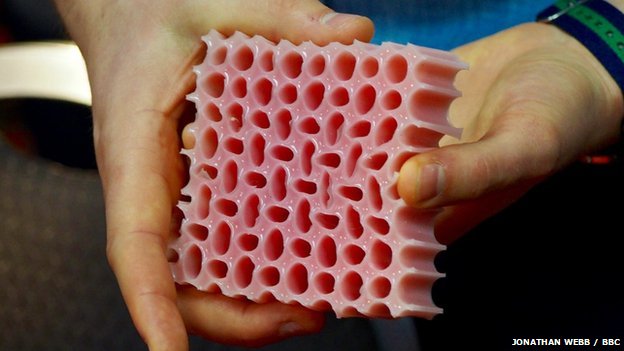
  • _81396248_81396110A good friend, great thinker and NASA Software Engineer has been a terrific resource for my writing (Ray B.) sent me an article about new materials being thought of for space exploration vehicles.  He has helped me so much with the real physics of space flight to make space travel plausible in my Sci-Fi.  Here is yet another great article (posted on the BBC Future site) to help hard-core sci-fi writers describe the mechanics of their ships, shuttles, rovers, etc.

    Excerpt from article: ‘Prof Wegener works on cloaking, but his aim is not to make things invisible. He wants to hide them from physical forces, and last year his lab produced a honeycomb-like material that made an object beneath it unfeelable [sic].’ 

    The information in this article will help me fine tune the materials of my shuttle, used to land on an alien planet.  I have always felt that if I believe it, so will my readers.

    To read the full article, please refer to the link below:

    http://www.bbc.com/news/science-environment-31725045


  • _81144398_pia18919_hires

    Here is another Tech Tip for the hard core sci-fi writer to make your space travel, plausible.  And don’t forget, you need the ability to slow down, so using the concept, you can sail into the solar wind.

    http://www.bbc.com/news/science-environment-31556326

    You can read the full abstract in Science Magazine.

    http://m.sciencemag.org/content/347/6224/860

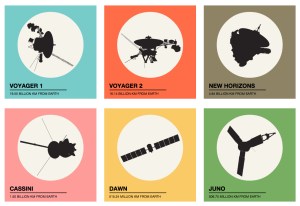
  • ProbesThe essential guide to space probes for Sci-Fi writers.  I love this site.

    Remember the 1979 Star Trek: The Motion Picture where V’Ger, the alien entity, is identified and later revealed as the legendary Voyager 6?


    Well, thanks to Ariel Waldman and Lisa Ballard of Spaceprob.es, this can serve any Sci-Fi Writer wanting to incorporate past probes into their works, here is a great reference.