The atmospheric tension we’re all breathing feels terminal. It’s the byproduct of a relentless cycle of bad behavior and eroded morality that has become our primary distraction. We are caught in a “Mass Psychogenic Illness” (MPI)—a frantic, unspoken pressure to join the fray simply because everyone else has.
It begins the moment you wake: the low hum of polarized news, the jagged edges of social media, the friend asking which rally you’re attending. Even if you silence the digital noise, you eventually have to drive. You see it in the lane-cutters who gain nothing but a red light, the stop-sign rollers, and the drivers who pull out in front of you on an empty road just to assert dominance. At the store, you hold a door only to be treated like an invisible servant. You’re clipped by carts in the aisles, navigated by people on a “genetically timed” shopping spree, hunting for their next dopamine hit. Eye contact is dead, replaced by the predatory gaze.
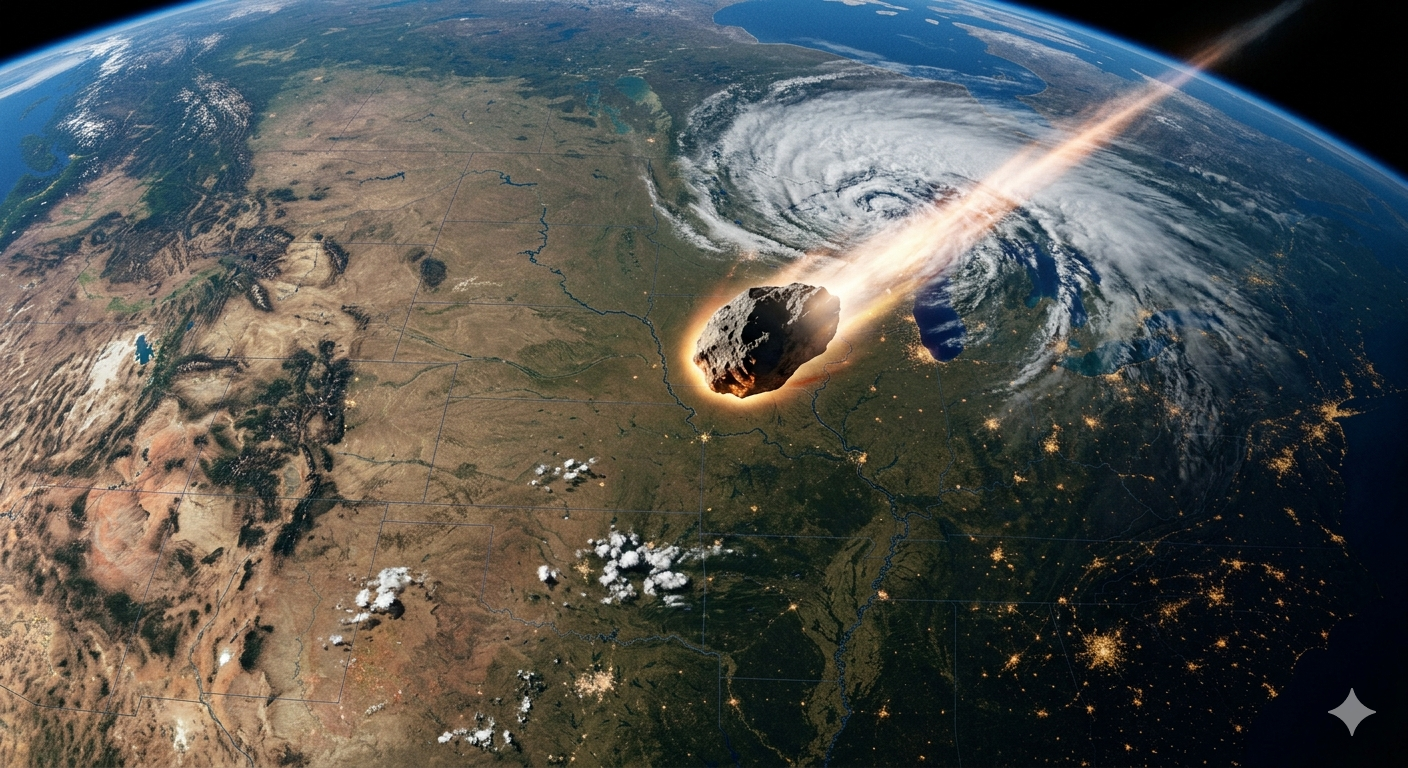
Pay attention. The Earth is a physical thing, but its interface is reactive. Quantum Physics tells us atoms are 99% empty space; this “nothingness” within us reacts to the nothingness without. Just as hurricanes and tornados are not divine punishment but a violent redistribution of energy to maintain equilibrium, perhaps we are due for a cosmic correction. Why not an inbound asteroid to cut through the static and force a global unification?
In 1998, Jack McDevitt wrote Moonfall. It predated Neal Stephenson’s Seveneves and the Hollywood blockbuster, Armageddon, capturing the raw human spirit of togetherness in the face of extinction. I highly suggest you read Moonfall before 2029.
Because right now, I am waiting for the visitor no one is talking about: Apophis. Named for the God of Chaos, it is a 340-meter mountain of rock slated to arrive on Friday the 13th, April 2029. And if we dodge a bullet then, it is set to return on Easter Sunday, 2036–– both of those dates more than coincidence, In 2029, Apophis will pass within the orbit of our own satellites and only 89K km from the Moon. That isn’t just a close call—it’s a reminder that the universe has a way of resetting the scale. Now would be an good time to use your blinkers, smile and thank someone for a good deed and step aside from the MPI.
Barry Commonor’s Number One Rule Of Ecology: Everything is connected to everthing else.

 David Nadas
Leave a reply to John J. Sanders (sandwolf) Cancel reply