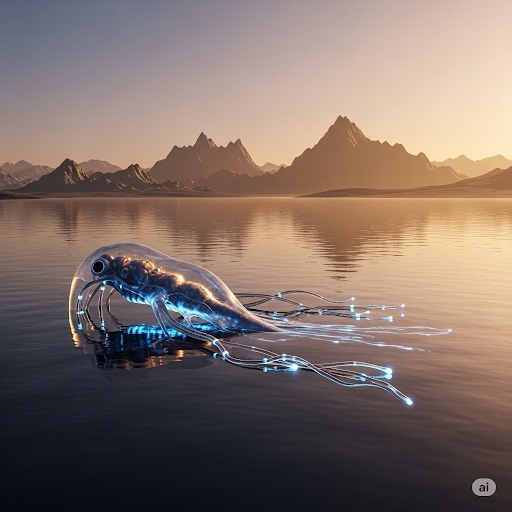
My starting point, Saturn’s Titan. A silvery world where hydrocarbon rain feeds shallow oceans, their surfaces appearing to oil can, disturbed only by the slow ripples of life.
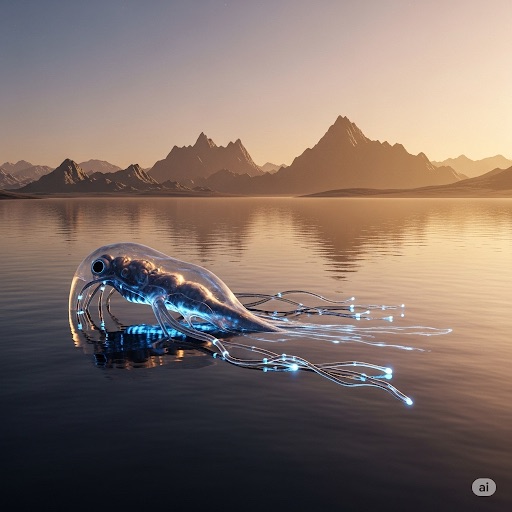
Our journey starts closest to the sun on Mercury.
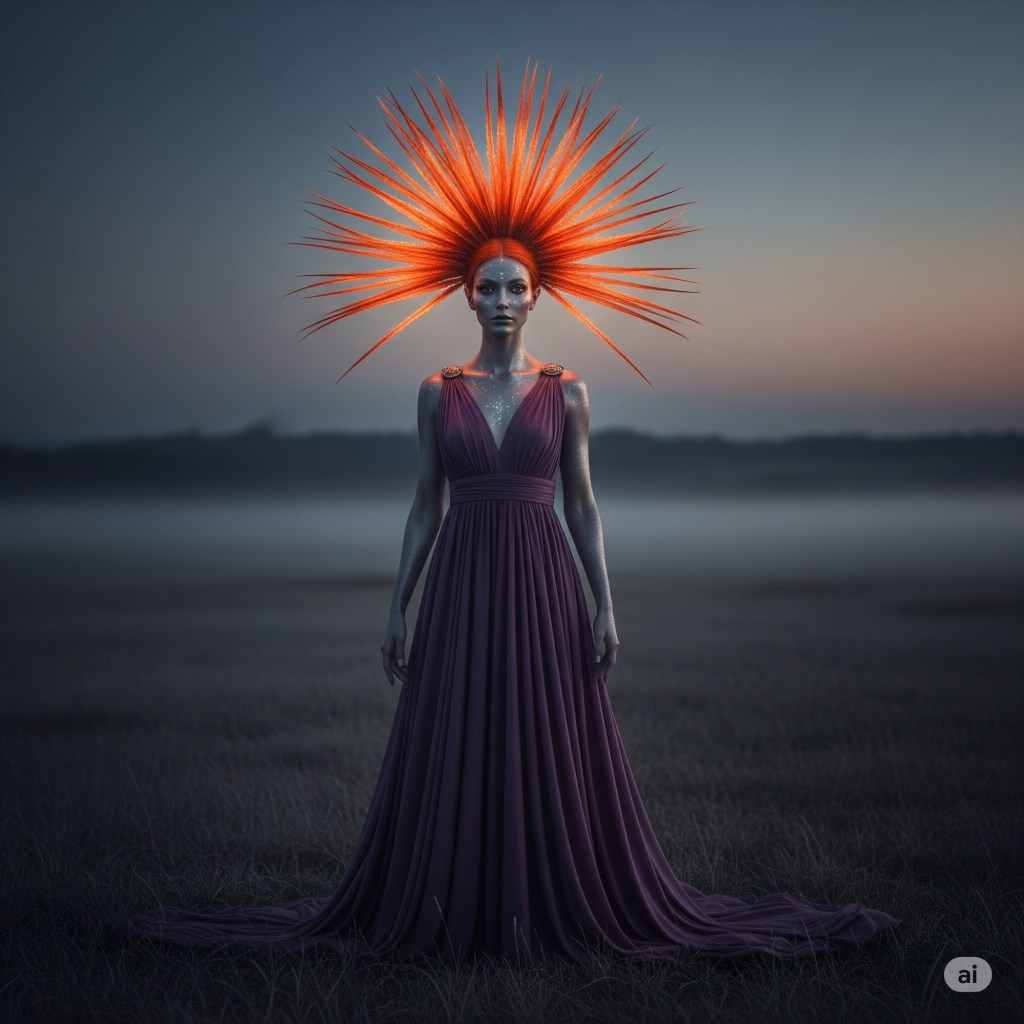
Without giving AI specifics, other than: What do you think a life-form on Mercury would look like… I was pleasantly surprised to see color in the inner worlds and that a life-form would shield itself in the shadows.

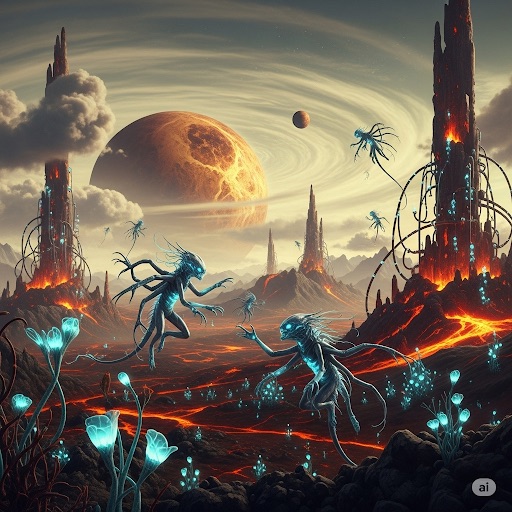
Moving away from the sun, we glide through the silence of space towards Venus. What AI generated was more chaotic than I would have imagined, but spot on for a pulp fiction cover— like so many I have read in my youth.
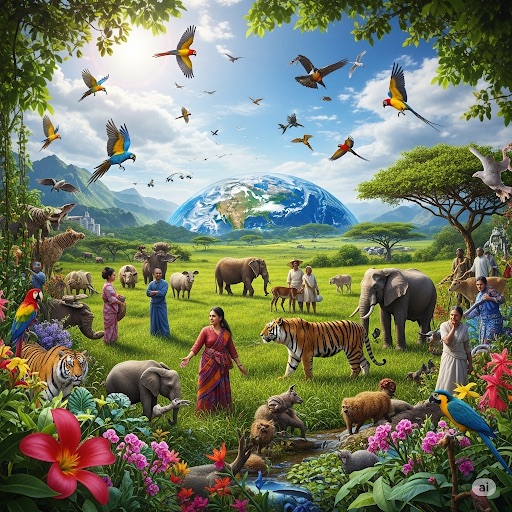
Onward to our dear Earth— the Goldilocks Zone of life. What an amazing place we have.
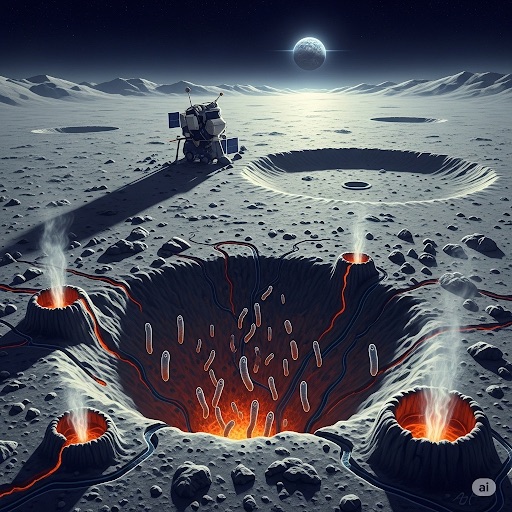
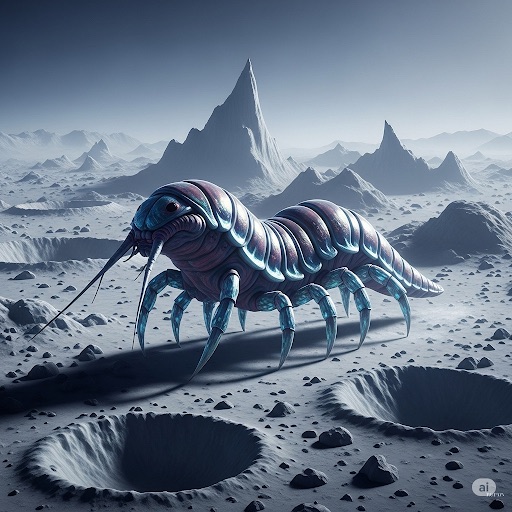
The Moon of Moons. We rushed to get there, but like a Robin so focused on finding a succulent worm we were blind to see the juicy beetle crawling over our boots. I think the Moon is hiding something in plain sight.
Mars. The Godfather of Alien Life. Growing up through the 60’s, where my appetite for Science Fiction was fueled by countless black and white movies and Sci-Fi novellas, featuring aliens from Mars queuing up to kick our ass,
I remember dragging my arms through shelves of pulp fiction softcover books, buying stacks at a time, wrapped in twine.
Mars. I owe my writing to you.
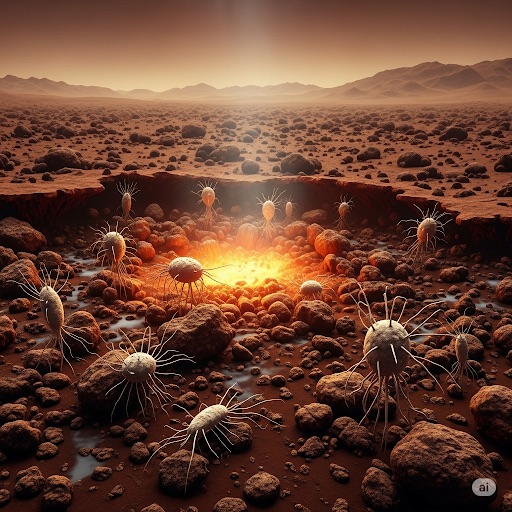
The Asteroid belt sits like a coral reef in our solar system, separating the inner and outer planets. I was duly impressed with what AI came up with— a gift and recognition to my former life as a Marine Biologist, sparking just a bit of cynicism in me that AI knows a bit more than than I am comfortable with. Even the horizon of this image features a smirk.
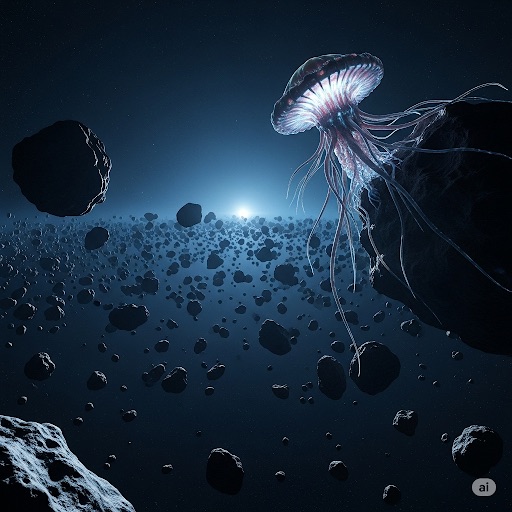
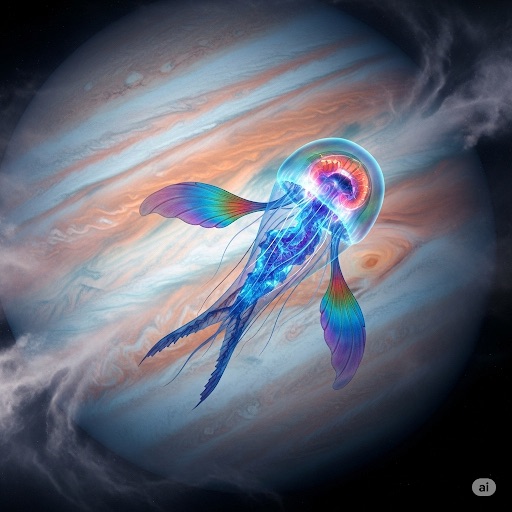
Past the Asteroid belt lies the outer planets— the giants— and Jupiter at its threshold. What lurks in the atmosphere, so turbulent and viscous.
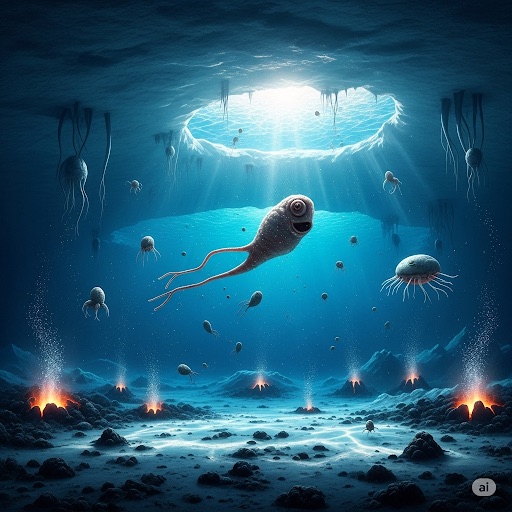
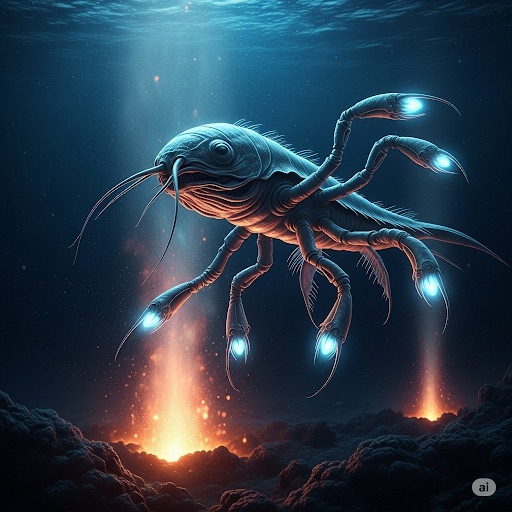
Then there are Jupiter’s Moons. 95 in total. But the Galilean Moons of four are the most intriguing: Europa, Io, Ganymede and Callisto. Some layered in ice, concealing an ocean world below, where light sparkles down through cracked surfaces of crystal and the Great Red Spot of Jupiter is keeping an eye upon its flock.
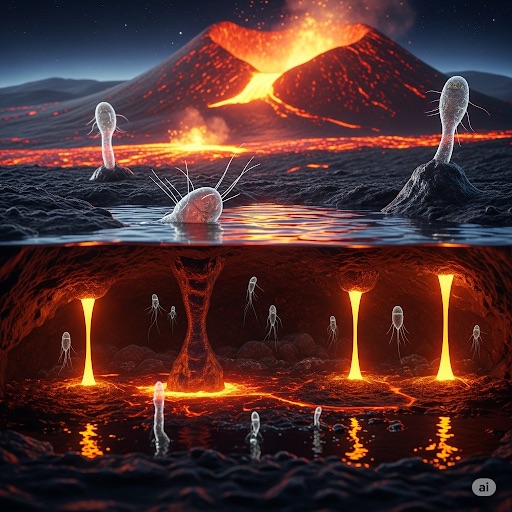
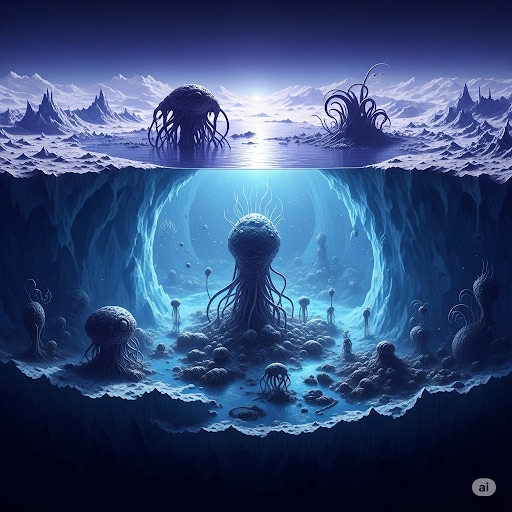
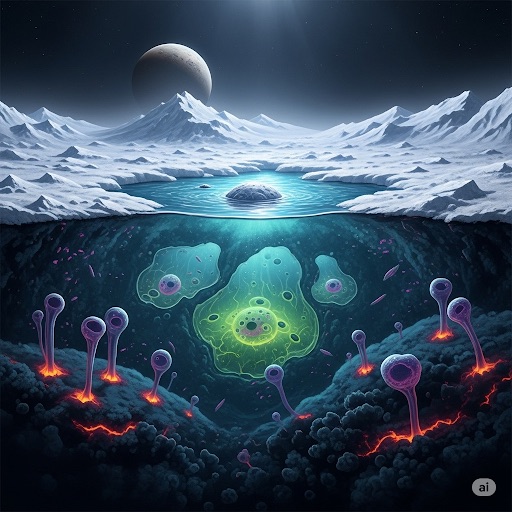
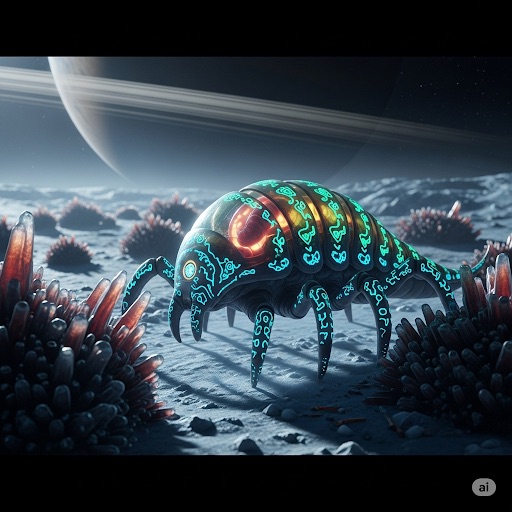
Only a slingshot away we find Saturn, the dim of our sun now a point of light over her shoulder, where life forms are concealed beneath the gasses and may venture out upon the necklace of crystal ice rings that stretch out like the arms of a performer on stage.
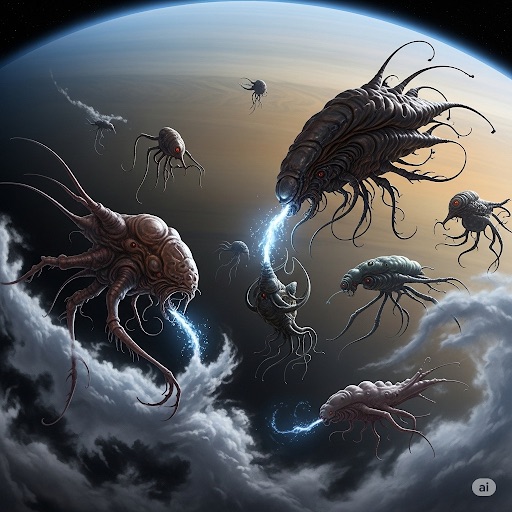
Like Jupiter, Saturn herds its flock— a staggering 274 confirmed objects. But the Major Moons: Titan, Rhea, Iapetus, Dione, Tethys, Enceladus, Mimas, and Hyperion are the star performers.
I was impressed that AI used isopods and amphipods for most of the moons, which are crustaceans, but used a Medusa for Titan, due to the methane surface oceans.
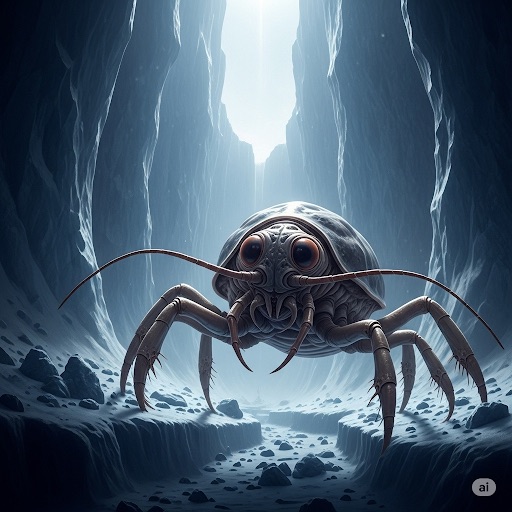
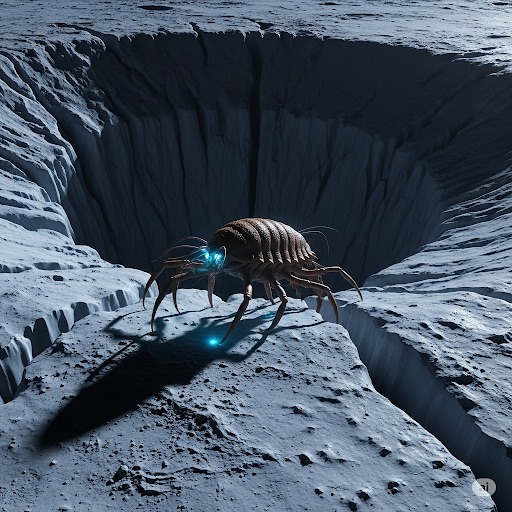
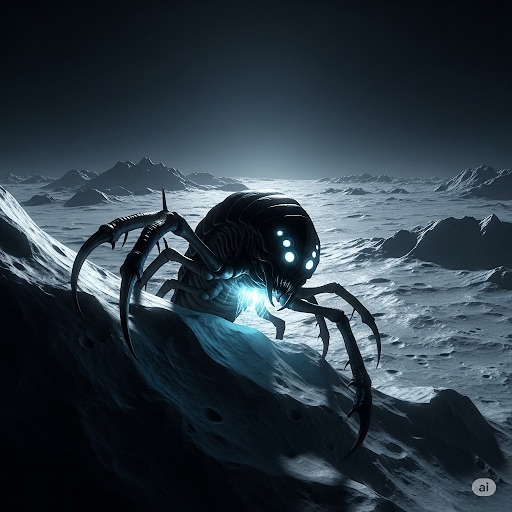
Uranus— the butt of jokes (and yes… I went there). What a cold and icy place you are, but nonetheless more mysterious with your sideways spinning axis, methane icy surface, 27 small moons, and faint rings embracing the blue hue of your aura.

Pluto, Pluto, Pluto. I Have never forgiven the consortium of pseudo-intellectuals who have demoted you. You, perhaps, are the most loved.
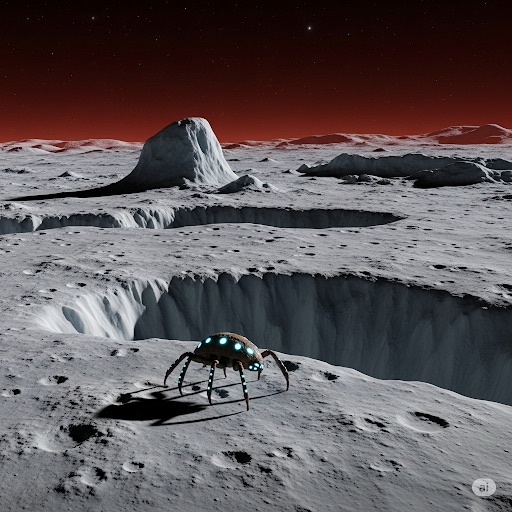
With our Solar System now a distant memory, we pass through the Heliosphere leaving the solar wind behind and punch through the Termination Shock into the Heliosheath and beyond.
Traveling at the speed of light for 20 years, we have aged only 9 of those due to time dilation and find ourselves in the solar system of Gliese 581, where my upcoming novel, Silversides, takes place. On the planet 581-g, or known to its inhabitants as, Dykazza.
 David Nadas
Leave a comment