
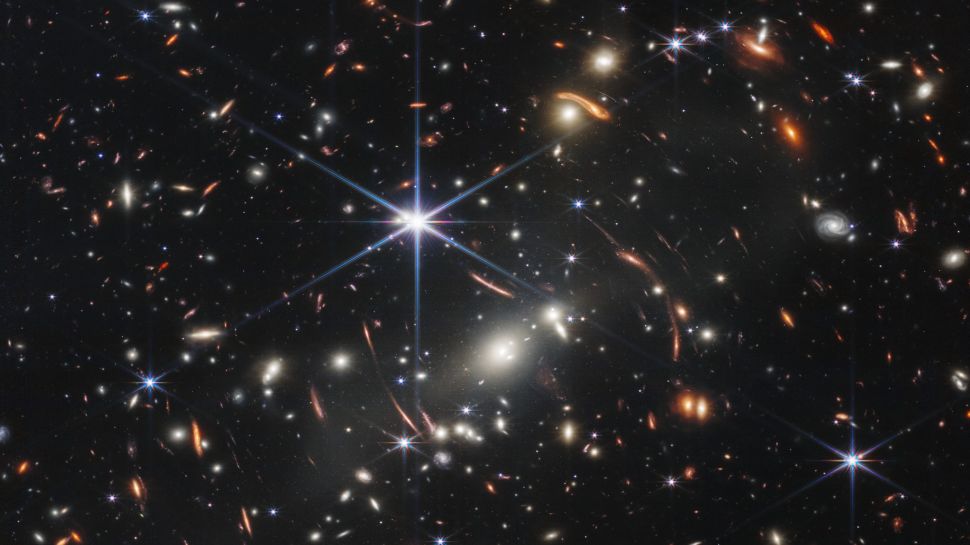
From my early years, my gaze upon the Cosmos felt like a beckoning homeward. The allure of what lay beyond our planet captivated me, and began my quest to observe this curiosity through the eyepiece of the budget telescopes I accumulated—many sourced from garage sales or serendipitous finds during trash pick-up days. And through those telescopes, I was determined to unravel the mysteries of the universe.
Recently, basking under the Florida sun by our pool, I observed shadows swirling along the bottom. Some mimicked spiral galaxies while others mirrored nebulas. Fascinated, I stooped down to find its source, but the pool’s surface betrayed no ripples. I traced the shadows to their origin which led me to the side of the pool. There, submerged along the wall was a return valve. Bingo!
Suppose the jet plume of my pool was the Big Bang, birthing these whirlpools from a singularity. But what was causing those shadows to spin? Why some clockwise and others counterclockwise? Why did some shadows appear so unorganized? What caused some to form perfect spirals in the first place?
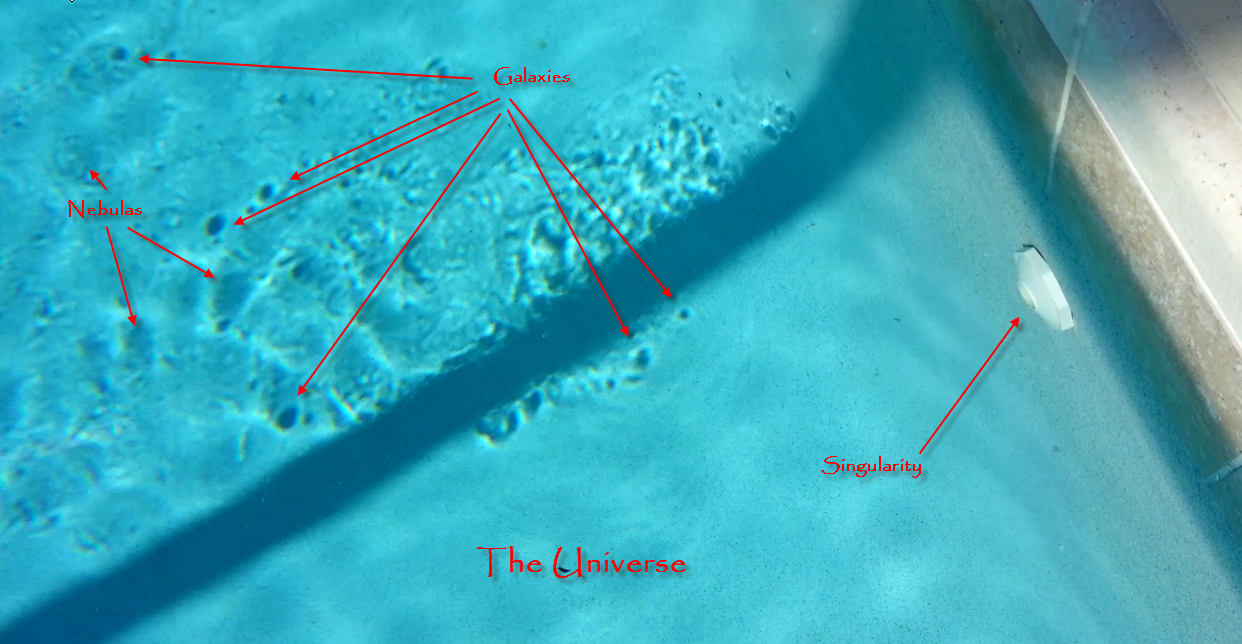
That’s when I had my epiphany…. Conceiving the water as Dark Matter, I mused how Dark Matter could breed friction, and a derivative form of Fluid Dynamics could govern the behavior of what forms within it, birthing spiral galaxies and nebulas.
When I asked ChatGPT about applying fluid dynamics to dark matter and the formation of galaxies, the response was interesting:
ChatGPT: Some cosmological simulations that model the formation of galaxies and large-scale structures do use a combined approach, where normal matter (which behaves as a fluid) and dark matter are simulated together. This allows researchers to study the interplay between these two components in the formation of galaxies and cosmic structures. However, the fluid dynamics aspects are typically applied to the normal matter component, while the dark matter component is treated as collisionless particles interacting only through gravity.
But my real epiphany was solving the question I always had. Why did some galaxies spin clockwise while others counter-clockwise? The dichotomy of galaxies’ spins—clockwise and counterclockwise–– hinges on one’s vantage point, viewable from either side, both directions hold equal sway, neither observation more correct than the other. All I had to do was sit by my pool and unravel some of the mysteries of our universe. I started to laugh, remembering back to a phrase my father always used: You never need to look any further than your nose to understand anything.
Regrettably, the concept of, “Do galaxies spin clockwise or counterclockwise?” remains obscured in our binary makeup when arguing about politics, religion and almost any topic spewed upon the boards of Media these days. If only we could see from both sides and realize, we Are we arguing over the same thing?
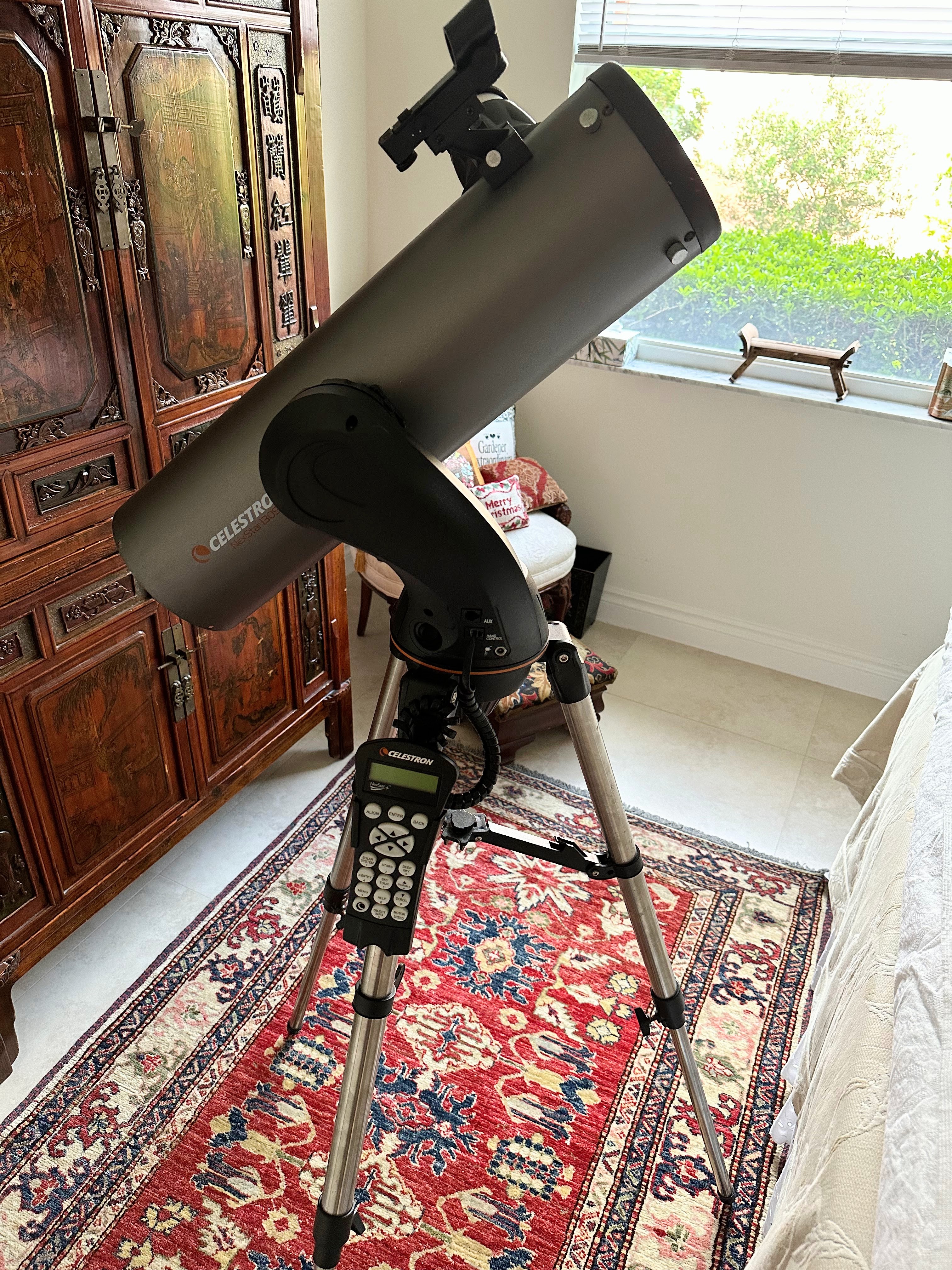
As an aside I recently found a Celestron 130mm SLT telescope in the trash on pick-up day, which was missing the primary mirror and mirror cell, but the tripod, tube, secondary spider mirror, focuser, computer and motor drive were in perfect working condition. Parts from eBay are arriving shortly.
 David Nadas