Life is never more than an iteration– a series of fractal experiences where we jump from one era to another, seemingly different but always the same.Years ago, in NYC, during the end of the Koch administration when subway cars lacked AC and the lights constantly flickered, I was sitting near the door of a downtown #4 wearing a three-piece suit with a WSJ folded precisely into quarter panels— a lost art that no one seems to practice anymore. When you have traveled the underground for as many years as I have, you never need to look up to see where you are because the sounds along the route are as unique as the stations themselves. I could tell from the screeching and torquing of metal along the rails that we were approaching 14th Street and waited for the movable platforms to nudge their corroded teeth up against the cars and for the sleepy conductors to poke their heads through the windows, signaling to each other it was safe enough to open the doors. After the flush of commuters rushed in and out, an elderly blind gentleman, draped in a poncho, stepped in with an accordion and a sweeping cane fitted with a worn cup to catch loose change. As the doors wobbled shut and the train jerked into motion, he found his footing and squeezed air into his instrument. This was the third panhandler to come through and I was running low on change. What I thought was going to be yet another mariachi tune evaporated when he began to sing, his voice, not expected, angelic, almost tearful, floating above the simple chords the way a butterfly glides over a field of wildflowers. I put down the paper and listened, purposely missing my stop at Wall Street to hear him sing. The last stop in Manhattan had arrived and the doors were opening. As I waited for the last breath of air to be squeezed out of his accordion, I dropped some singles into his cup before birthing myself through the crushing doors at Bowling Green and onto the platform where the tang of ozone lingered in the stale air. I remained there, held in a trance with a feeling of love for everything, regretting not having asked the gentleman his name or the title of the song as I watched the last car with its tags of graffiti drift into the darkness beyond.For years it haunted me, my lunch hours spent frequenting the J&R music stores along Park Row, searching through stacks of LPs in the foreign language section, looking for Mexican folk singers while asking the staff if they could identify my comically mimicking cadence of the man’s voice. My persistence carried through the decades, the Internet era, conducting endless Google searches for that needle in a haystack. Even with all this technology at my fingertips, I had given up hope of ever finding it.Then the other night, Meredith and I were watching a movie she had picked out from Amazon Prime, “Big Night,” a 1996 release starring a cast headed up by Stanley Tucci, Tony Shalhoub, Mini Driver and Isabella Rossellini to name a few. It was during the opening credits and listening to the music track when I felt the prick on my finger. There it was, the song which had haunted me for years began to play… in Italian and not Spanish. I grabbed my mobile and tapped on the Shazam App….. Bingo! “Stornelli Amorosi” by Claudio Villa. After researching everything there was to know about the song and singer, I now understand why that man on the train played this song and why it was chosen for the film. I have researched Claudio Villa (impressive), and what Stornelli Amorosi means: A ‘love stornelli’. A stornelli is the Italian precursor to a rap battle… yes…way before it was popularized during the hip hop era of the late 80’s, where singers would brag, boast and throw insults, each trying to outdo the other. Claudio’s love for this type is singing shines bright in his “Stornelli Amorosi.” Needless to say, it is now forever in my favorites.
David Nadas
Science Fiction
-
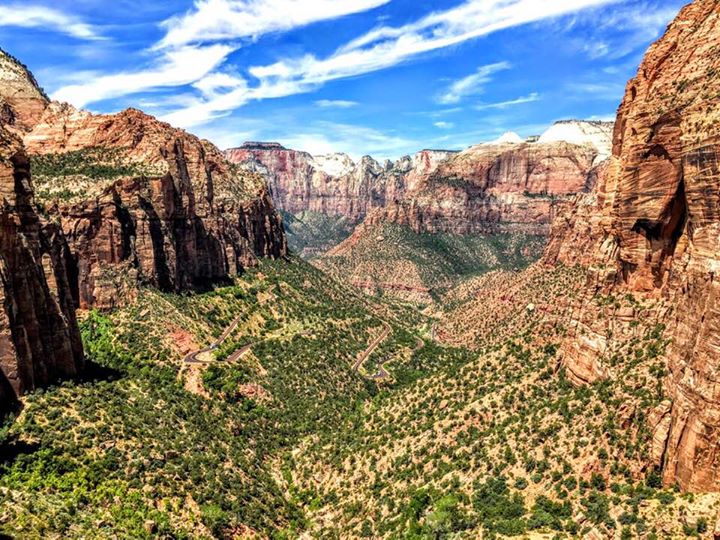
It is difficult for us… as humans.. to comprehend the notion that everything in this scene is in motion. To Mother Nature, we are moving way too fast for her to notice we ever existed, but it is in this valley, staring up at these magnificent cliffs we are in awe of our own existence.
-
There is no hiding the fact that Europa is my favorite object in the solar system–heck! It was the supporting protagonist in my novella, From Europa With Love (see excerpt below). As a former Marine Biologist, fascinated with life surrounding Earth’s deep sea vents, I had always thought that Europa was our greatest chance at finding extraterrestrial life in our solar system.
So when I read the article on Space.com “Heat gave Jupiter’s icy moon Europa layers. That may be good news for the search for life,“ I can’t help but feel excited by the possibilities.
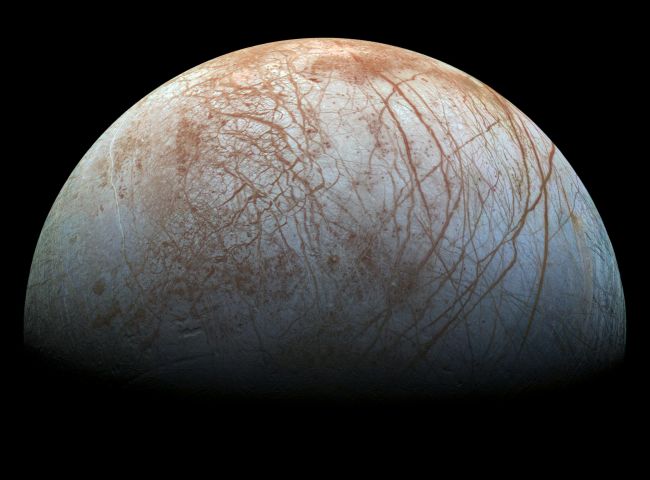
Excerpt : From Europa With Love
He was regretting coming back here, “All I had to do was ignore the goddamn distress signal and I would be sitting in my bay right now, feet up, staring out the window with a GODDAMN TUMBLER OF ARDBEG IN MY HAND!”
Predictably, there was no response from Otto.
“Are you capable of praying Otto?” Kulcin goaded, not expecting a cognitive response from a machine. “Because if you are, then start praying.” he said, angling the nose of the shuttle upward. Firing a quick succession of bursts from the remaining FN2 thruster, he brought the craft down hard where it rocked forward onto its nose and came to an abrupt halt. Kulcin held his breath, knowing that if he could count to three he might be safe: one-thousand-one, one-thousand-two… then a sharp crack resonated throughout the hull, and the nose plunged beneath the ice as the shuttle listed forward, the water rushing furiously against the cockpit windows.
-
You might want to place this on your night stand as a next read before it, and books like it, no longer exist. As of my last measurement on social media, we appear to be @ 450 F
What we need is a November Seed
#Fahrenheit451 #NovemberSeed
-
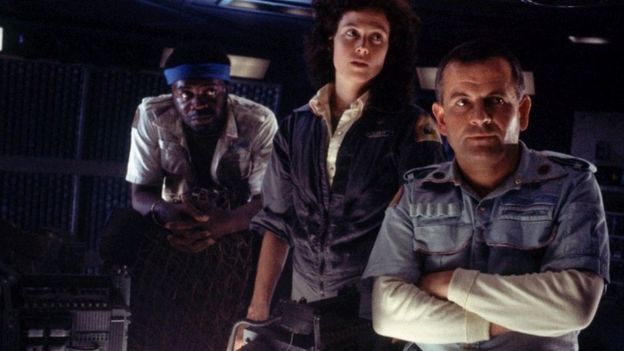
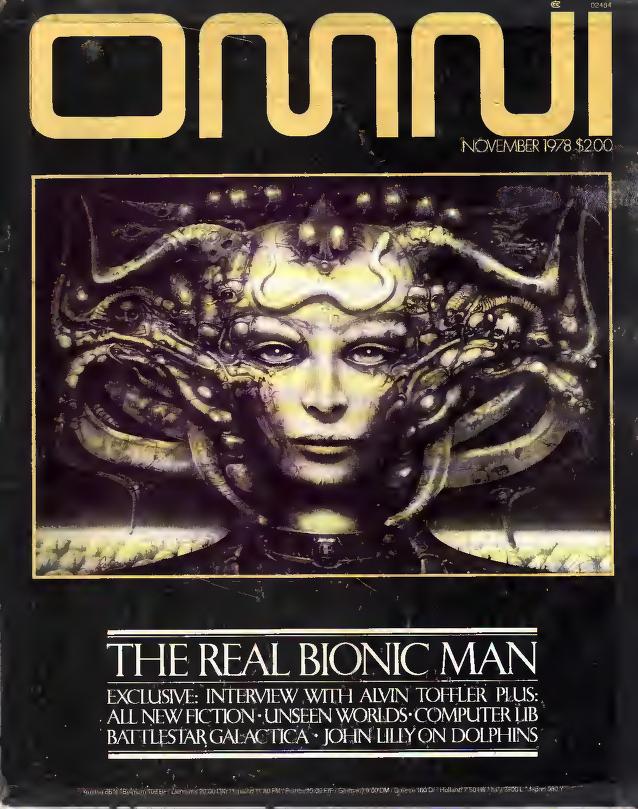
Sir Ian Holm (right) My desire to write Sci-Fi was cemented in 1979, after seeing ALIEN. I had read about the making of this movie months before in OMNI Magazine, The movie alien was a first of many: A true Alien devoid of emotion; a first lifelike android (Ash). I thought Ash’s character was the perfect antagonist, who hid in the shadows of the Xenomorph. When it was discovered Ash was an Android, it blew the audience away–you could hear our collective gasps.
It was Ash’s character that I truly believe, future antagonists of all movie genres took flight from.
You will be missed Sir Ian Holm, but never forgotten.
-
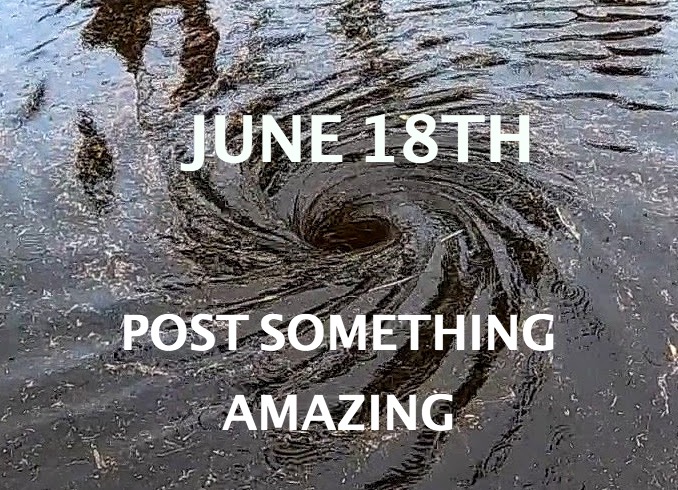
I started to think of what I would like for my birthday and the first thing that came to mind was–– How about something amazing going on in the world! I mean each and every day there are some amazing things happening in every corner, every industry, every trade and facet of our lives….. yet we are being brainwashed to think that only terrible things are happening… everywhere. Think about how those who are doing amazing things feel–I mean we just launched two Astronauts to the ISS from the US for the first time in a decade. Like that’s not AMAZING!
Change the dialogue of social media and don’t get sucked into the vortex of sensationalism or fake news––
-
I recently watched an episode of Electric Dreams (Sci-fi shorts based on stories by Philip Dick) titled, “Kill All Others.” This episode was about a man hanging dead from a billboard while people walked by as if this were the ordinary–just typical shock marketing. But after ‘The Candidate’, a politician (Vera Farmiga), makes a shocking statement encouraging violence to Others, I found myself feeling a bit anxious because of its relevance to today’s current events. Now a lot of you who will watch this might say, “This is Trump!, the DNC, The NYT, CNN, Rush Limbaugh, FOX News, AntiFa, etc.
But take a deep breath…. It’s not about any of them….. It is about all of us….
This Scj-Fi short has something In common with my current work under wraps, I have a group of Earthlings on another planet referred to as The Others…. This episode has made me think about a few edits. Do I take it down the path of Philip Dick’s propensity to paranoia? Hmmm. I’m not sure I want to wander down too many of these paths because it fills my dreams with the same. And that did not turn out well for Philip Dick–God rest his tortured soul….
But this episode….. This episode was about us. About us being brainwashed by Media and Politics–keeping us focussed on the non-essential so those in charge can go on with their plans, battling each other out for power. You see… nothing has really changed since the days of Henry the VIIII, except today’s tactics are not as vicious. In the end there are those in the high castle and those that are not and those that are not never feel safe because they are so fearful of the amplified views being spread.
I was pulling for poor Philbert Noyce….. one of us………
-
There was an expression my father always used: “Nihil liberum est.” My dad was big on Latin, and it means, “Nothing Is Free.” But if the attached video does not quite do the job and you need to understand what the cost of data might look like in a dark future, read the Sci-Fi trilogy by Peter Watts: The Rifters Series.
-
“A picture is worth a thousand words,” was plagiarized and para-phrased after Henrik Johan Ibsen’s death in 1906. Henrik was a playwright and director who once said; “A thousand words leave not the same deep impression as does a single deed.”
So it is fitting that I now say, the plagiarized and para-phrased version you know today has been hi-jacked. I shouldn’t care, but this is so comically fractal it leaves me wondering about humanity. What I am seeing on Social Media is disturbing, where a picture now takes well over a thousand words to correctly depict its intension…
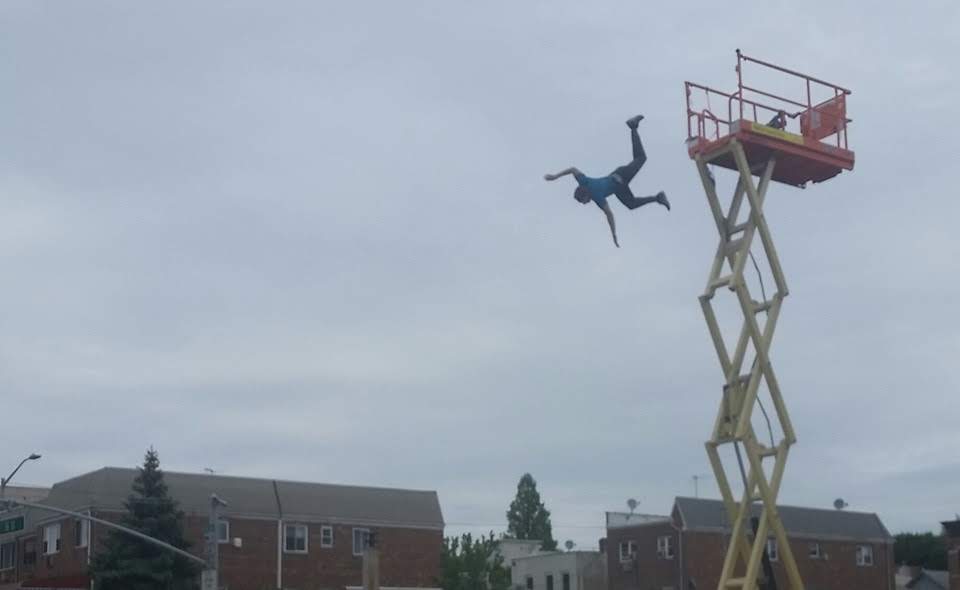
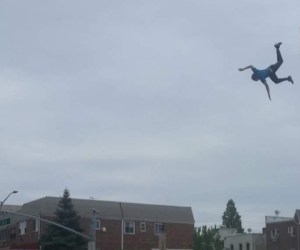 For example: Here is a picture, I took, In Queens NY one day. Yes, perfect timing… I just happened to be in the right place at the right time soaking in images on my phone when I came around a corner and saw a body sailing through the air…. HOLY CRAP! WHF! Now…. If I let that image stand on its own and never showed you what happened a 1/16th of a second before, well, you would be none the wiser.
 And this is my point. This is the state of Social Media today.
So before you post, repost, critique, or look for the result you are searching for…. Remember these images and question what might have happened a 1/16th of a second before or after. Things are never what they appear. Take the time and research what you repost. Don’t just hit the green button—there is no reward…. Just shock…
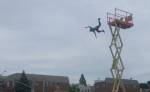 The image of the falling man was taken at an outdoor fair, presented by the Museum Of Moving Images, Astoria, Queens, New York City. If you have never been there—it is a must.

 David Nadas