Ask anyone if Time Travel exists and the vast majority of those asked will quickly tell you… No! Because they are looking to correct the past and the only direction that time travel exists in, is the future. So what is my proof? Well, I asked ChatGPT to summarize some of the earliest Sci-Fi novels that predicted the workings of the future: And the list was close to what I put together (I added references 8, 9 & 10.
The mere fact. I am using A.I. assistance is from Sci-Fi of the past (2001 A Space Odyssey).
And of course, I want to hear your proof that time travel does/does not exist, in either direction.
- Jules Verne’s From the Earth to the Moon (1865)
Verne envisioned a crewed mission to the moon nearly a century before the Apollo 11 mission. Although his ideas on how the journey would be achieved differed (he suggested a giant cannon), the concept of space exploration and moon landings was well ahead of his time. - Mary Shelley’s Frankenstein (1818)
Shelley’s novel imagined the reanimation of dead tissue using science and electricity. While the exact scenario remains fictional, her exploration of bioengineering, organ transplantation, and the ethics of life creation foreshadowed modern fields like genetic engineering and bioethics. - Edward Bellamy’s Looking Backward: 2000-1887 (1888)
Bellamy’s story imagined a utopian future society with features like credit cards, shopping malls, and a system resembling universal healthcare, many of which resemble modern developments in consumerism and public services. - H.G. Wells’ The War of the Worlds (1898)
While The War of the Worlds is about an alien invasion, Wells speculated about advanced technology, including heat rays (which could be likened to lasers) and chemical warfare, both of which would later become real. - Hugo Gernsback’s Ralph 124C 41+: A Romance of the Year 2660 (1911)
Gernsback, sometimes called the “Father of Science Fiction,” imagined technologies like radar, television, and solar energy. While his narrative is less well-known, these inventions were groundbreaking in concept at the time and became real within decades. - Arthur Conan Doyle’s The Lost World (1912)
Though not about the future per se, Doyle’s novel introduced the concept of exploring remote areas with unknown flora and fauna, which presaged real-life discoveries of species and ecosystems deep in the Amazon and other secluded regions. This can also be linked to modern biodiversity research and conservation. - E.M. Forster’s The Machine Stops (1909)
This short story foresaw a world where people live in isolation, communicating through screens, with most services automated by a vast technological network. The eerie resemblance to the internet, social media, and even video conferencing makes Forster’s work uncannily prescient. - George Orwell’s 1984 (1949)
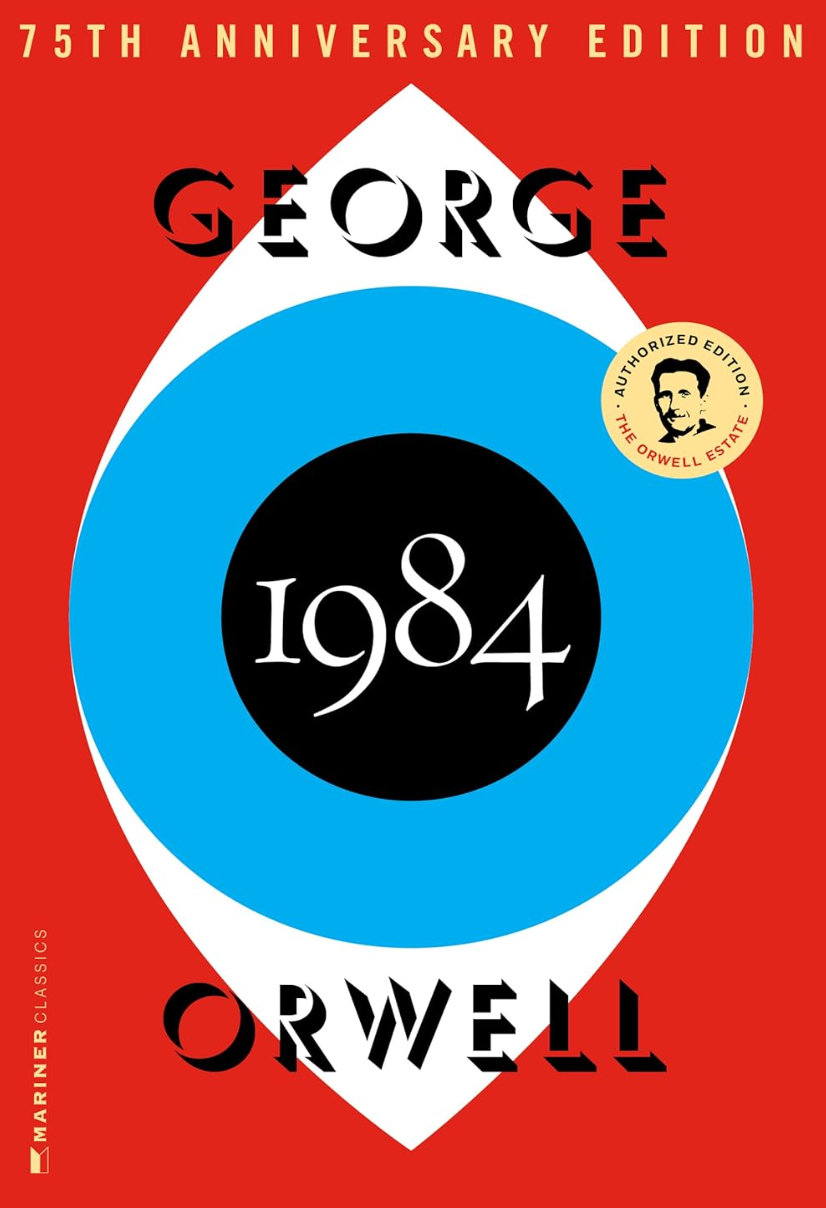
Orwell’s 1984 envisions a dystopian future where totalitarianism is taken to an extreme, with constant surveillance, government propaganda, and strict control over personal freedoms. Many concepts from the novel, such as Big Brother, Thought Police, and Newspeak, now feel strikingly familiar in an era of mass surveillance, data collection, and media manipulation. Technologies and practices Orwell describes, like surveillance cameras, facial recognition, and even censorship, are in effect in various forms worldwide. His work has often been cited in discussions about government overreach, privacy rights, and digital surveillance in the modern age. - Ayn Rand’s Atlas Shrugged (1957)
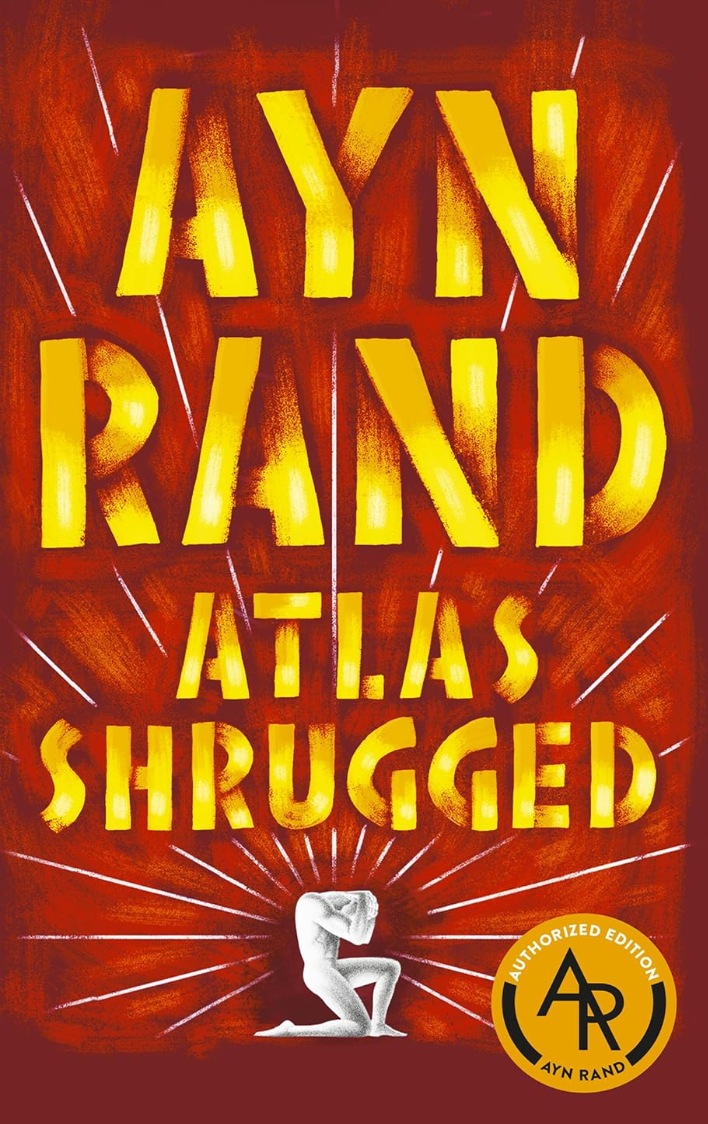
Rand’s Atlas Shrugged presents a world where government intervention and regulation stifle innovation, leading to economic collapse and the eventual exodus of society’s most productive and creative individuals. While not a direct prediction, Atlas Shrugged resonates with real-world debates about government regulation, free markets, and the role of individualism versus collectivism. Concepts like entrepreneurial burnout, over-regulation, and the idea of “going Galt” (named after John Galt, a central figure in the book who withdraws his talents in protest) are themes that have found new life in discussions of government policy, innovation, and economic freedom. - Arthur C. Clarke’s 2001: A Space Odyssey (1968), which he developed in parallel with Stanley Kubrick’s iconic film, is one of the most prescient science fiction works in terms of technology and space exploration. Clarke predicted or inspired several technological advancements that later became reality:
- Artificial Intelligence (AI) and Voice Recognition
The story’s AI, HAL 9000, is an intelligent computer capable of natural language processing, decision-making, and even emotions. HAL anticipated the development of AI systems like Siri, Alexa, and advanced voice recognition. Although HAL’s sentience and emotional intelligence remain fictional, modern AI and natural language processing have achieved many of the interactive functions Clarke imagined. - Tablets and Personal Screens
The film depicted astronauts using flat, tablet-like devices to watch news and gather information. This closely resembles the modern tablet, and companies like Apple and Samsung have created devices nearly identical to those imagined by Clarke and Kubrick. In fact, Apple referenced 2001: A Space Odyssey during its patent dispute with Samsung, pointing out how the film showcased tablet-like devices decades before the iPad was invented. - Commercial Space Travel
2001 envisions a future where commercial flights to space are routine, with a space station orbiting Earth and a shuttle taking travelers to a lunar base. While routine space travel for civilians hasn’t yet reached this level, we’re seeing a new era of commercial space travel with companies like SpaceX, Blue Origin, and Virgin Galactic making strides toward space tourism and lunar missions, bringing Clarke’s vision closer to reality. - Video Calls
The movie showed video calling (such as when Dr. Floyd talks to his daughter from space), a concept that seemed futuristic at the time. Today, video calls are commonplace on platforms like Zoom, FaceTime, and other video conferencing apps, making this one of Clarke’s more immediate predictions to come true. - Space Stations and Moon Bases
Clarke’s vision included a rotating space station and the prospect of human settlements on the Moon, both of which became more plausible after the Apollo missions. The International Space Station (ISS) functions as a multi-national, rotating habitat much like the one depicted in 2001, though on a smaller scale. Plans for permanent lunar bases are currently under development through programs like NASA’s Artemis mission. - Suspended Animation (Cryosleep)
Although still in the realm of science fiction, Clarke’s concept of astronauts in suspended animation for long journeys remains an area of scientific interest. Researchers are actively exploring ways to extend human hibernation or stasis for long-duration space travel.
- Artificial Intelligence (AI) and Voice Recognition
As you can see, all one needs to do is read Science Fiction to know that Time Travel into the future exists. Science Fiction is simply fact waiting to happen. And what better example of Time Travel into the future than looking at our current political climate. This election cycle was perhaps the most looked upon, global election of our time. The outcome of which will create U.S.A. 2.0. But I am going to leave that snippet for a later post and get back to time travel into the future, but as it relates to this election cycle.
Probably the most notable Science Fiction is George Orwell’s 1984. In a quick flyby. it involves a government over-reach (Oceania), a Super State in a constant war that may or may not exist, to corral it’s society in fear and distraction of Big Brother. Why this is not a mandatory read in our current educational system is because it was being played out in real-time. But with recent events in our political climate, in this version, Winston Smith will prove out that 2 + 2 does equal 4.
And what better, equally powerful, read than by Ayn Rand, because I can’t think of a more controversial figure who predicted the future so accurately. And what more controversial work of hers, but Atlas Shrugged. Read this snippet of Atlas Shrugged:
“I don’t know what it is that they think they accomplish—but they want us to pretend that we see the world as they pretend they see it. They need some sort of sanction from us. I don’t know the nature of that sanction—but, Dagny, I know that if we value our lives, we must not give it to them. If they put you on a torture rack, don’t give it to them. Let them destroy your railroad and my mills, but don’t give it to them. Because I know this much: I know that that’s our only chance.” She had remained standing still before him, looking attentively at the faint outline of some shape she, too, had tried to grasp. “Yes . . .” she said, “yes, I know what you’ve seen in them. . . . I’ve felt it, too—but it’s only like something brushing past that’s gone before I know I’ve seen it, like a touch of cold air, and what’s left is always the feeling that I should have stopped it. . . . I know that you’re right. I can’t understand their game, but this much is right: We must not see the world as they want us to see it. It’s some sort of fraud, very ancient and very vast—and the key to break it is: to check every premise they teach us, to question every precept, to—”
 David Nadas
Leave a comment