The apparel and textile sector is poised for a massive disruption driven by on-demand bespoke manufacturing and advanced digital technologies. Similar to how Amazon transformed retail, emerging platforms will allow consumers to store personal measurements, design custom clothing, and submit their ideas to a global network of competing makers. Traditional shopping malls and inventory-heavy stores will likely fade away, replaced by compact digital storefronts and time-shared retail spaces that utilize wearable identification tools. This transformation will severely displace legacy retail employment while simultaneously unlocking new global opportunities for independent artisans, micro-manufacturers, and solo entrepreneurs. Ultimately, the future of fashion will shift from mass-produced inventory to interactive, on-demand discovery.
I love a good t-shirt, but I am particular about picking one out. It has to be 100% cotton, heavyweight, a color I like, and carry a unique design that speaks to me. Because that set of criteria narrows the field considerably, I decided to make one myself. I spent the last week—four hours a day—teaching myself graphic design, researching online manufacturing platforms, and setting up a storefront to sell my designs, even if I end up being my only customer. For the record, I chose Pixelmator Pro(stand-alone app) for graphics, Printify.com for manufacturing, and Etsy.com as my storefront.
Wearing my new bespoke tee, relaxing in my favorite chair with a cup of coffee in hand, the result got me thinking. What if clothing manufacturing is the next industry to be fundamentally disrupted? That thought made me nervous—more nervous than I have ever been about artificial intelligence. What I am talking about, and what few people are discussing yet, is a massive displacement event across the global garment ecosystem.
Roughly 430 million people worldwide work across the clothing, textile, and apparel retail value chain. That is close to half a billion livelihoods.
Before anyone panics, however, we need to rewind to July 16, 1995—the day Amazon.com launched. At the time, I was sitting on a Wall Street trading floor, instrumental in upgrading the network monitoring infrastructure for a global bank. I vividly recall the financial analysts around me dissecting this new disruptive technology—the internet—and predicting how an online bookstore would wipe out a massive workforce across publishing and retail.
Depending on which side of the Necker Cube you were looking at, those analysts were both right and wrong. While traditional U.S. bookstore employment was roughly cut in half in the decades that followed, the broader outcome was transformative rather than purely destructive. Amazon didn’t just shrink an old model; it built an entirely new global logistics, cloud, and marketplace ecosystem that today supports over six million direct employees, contractors, and independent third-party sellers worldwide. Every major technological shift has ultimately multiplied far more livelihoods and global opportunities than it rendered obsolete.
We are standing on the edge of that exact same curve in the garment and textile industry—and the tools are already sitting in plain sight. In a single week, I used AI for concept, a standalone app to build the artwork, an on-demand platform to print the garment, and an online marketplace as my sales office. I am a one-man company, and my total startup cost was $79 ($0 for AI, $49.99 for Pixelmator Pro, and $29 to open an Etsy shop). Boom! I have a virtual closet at my disposal.
What I just built isn’t disruptive on its own, but it is the writing on the wall. It won’t be long before entrepreneurs take Piece A, connect it to Piece B, and create Piece C. The blueprint already exists in a company calleduShip.com—effectively the Uber of freight. On UShip, a customer uploads a photo(s) of an item(s) they want shipped, enters dimensions, weight, pickup and drop-off locations, and a delivery timeframe. Carriers registered on the platform then bid on the job, driving the price down while filling empty backhaul space so trucks never run an unprofitable empty leg. I have used this service a dozen times,. The quality of personnel , their transport and the care they take has been the most professional I have ever used.
Now apply that reverse-auction model to bespoke garments and textiles.
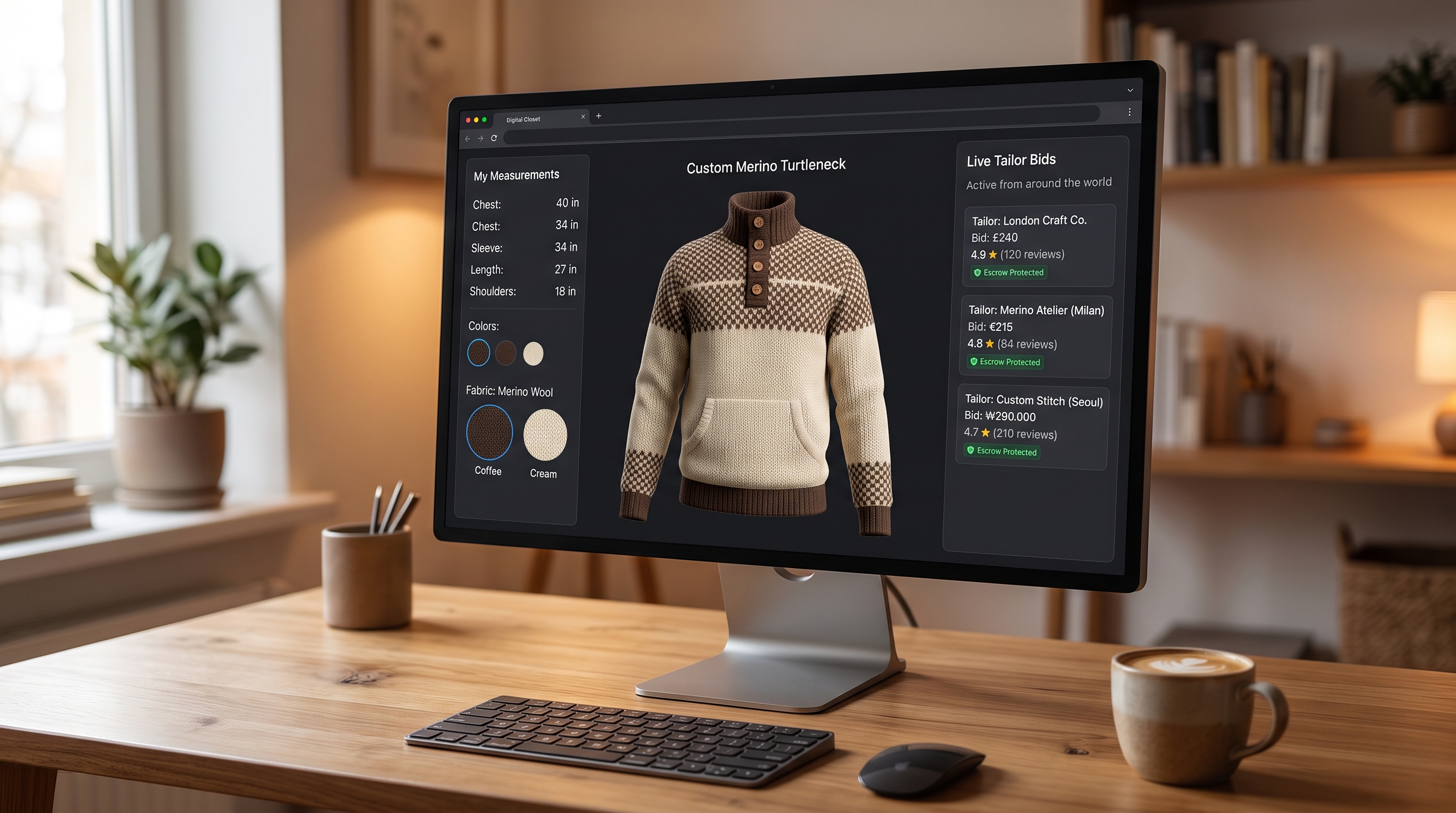
Imagine logging into a digital “closet”—an account storing your exact body measurements, fabric preferences, color palette, and existing wardrobe. Winter is coming, and you want a new sweater. You select a silhouette already in your closet, customize it in Merino wool with an offset coffee-and-cream pattern, large buttons, a turtleneck, and a front hand-warmer pocket. The platform’s AI renders a photorealistic mockup. You like it and hit send. Instantly, your specifications go out to thousands of independent garment makers, micro-factories, and tailors around the world, who bid to manufacture it. You select your maker, and—just like uShip—your payment is held in escrow until the finished garment arrives at your door.
Just as Amazon did in 1995, this shift will trigger massive displacement in legacy retail—likely serving as the final nail in the coffin for the traditional shopping mall—while simultaneously unleashing an explosion of new global opportunities. Millions of workers currently trapped in low-margin, mass-production sweatshops or stagnant retail floor jobs could transition into specialized micro-manufacturers, independent digital patternmakers, local alteration artisans, logistics coordinators, and solo brand founders selling directly to a global market with virtually zero overhead.
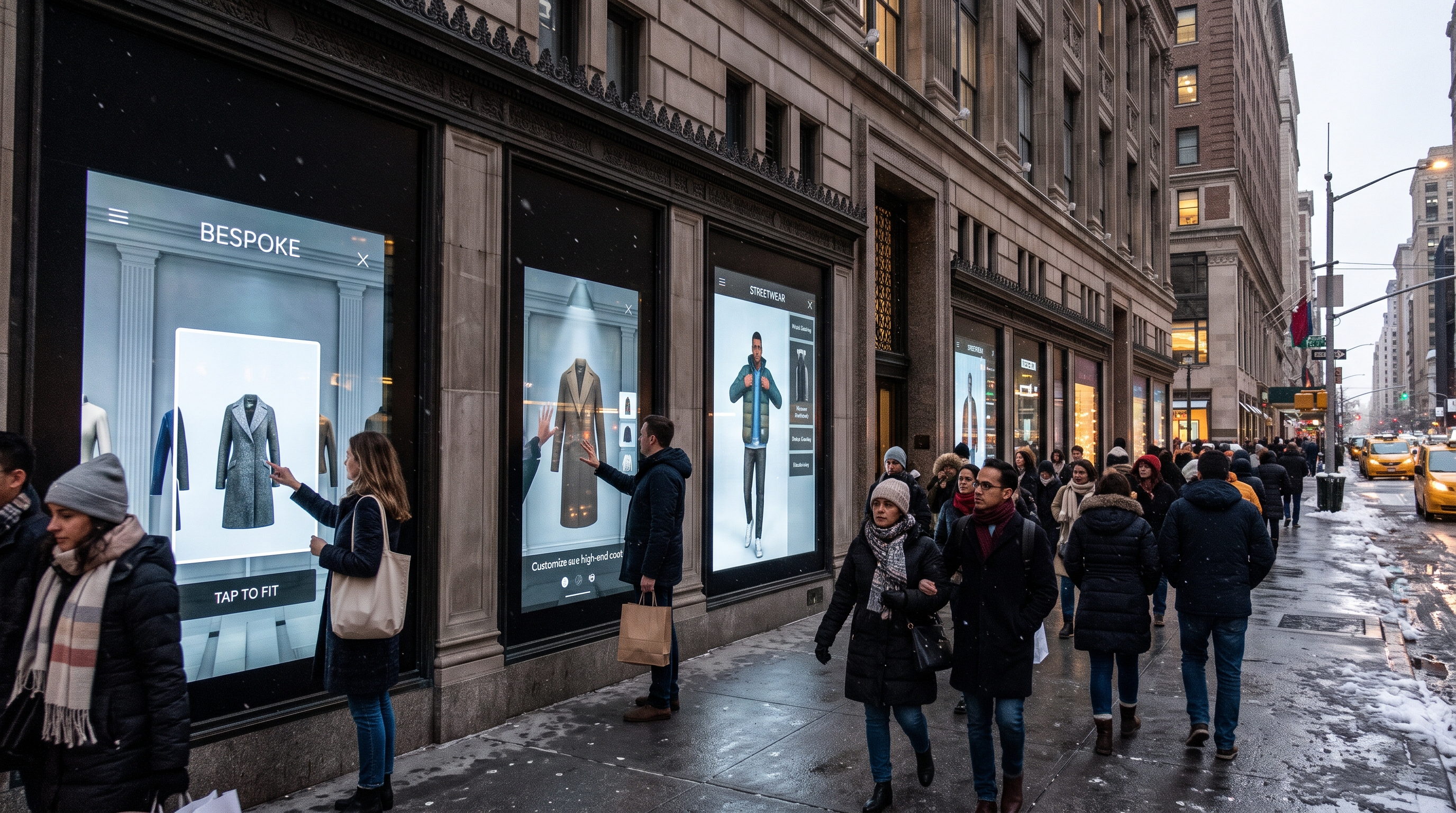
Brick-and-mortar retail won’t vanish entirely, either; it will radically reinvent itself. Legacy giants like Macy’s, Dillard’s, Ralph Lauren, Old Navy, Gucci, and Bergdorf Goodman (a personal favorite) won’t need cavernous multi-floor department stores stuffed with unsold seasonal inventory. Instead, only the brand presence remains—shrunk down to a sliver of ground-floor real estate featuring near-to-life digital displays and interactive touchscreen glass. Customers can browse a catalog on the window, customize the cut, fabric, or color on the spot, and send the order straight to the global bidding pool.
Take this one step further, borrowing from a recent experience I had aboard aPrincess Cruise wearing their OceanMedallion—a wearable device powered by Near Field Communication (NFC) and Radio Frequency ID (RFID), the same technology that lets your car breeze through a highway tollbooth at 80 mph.
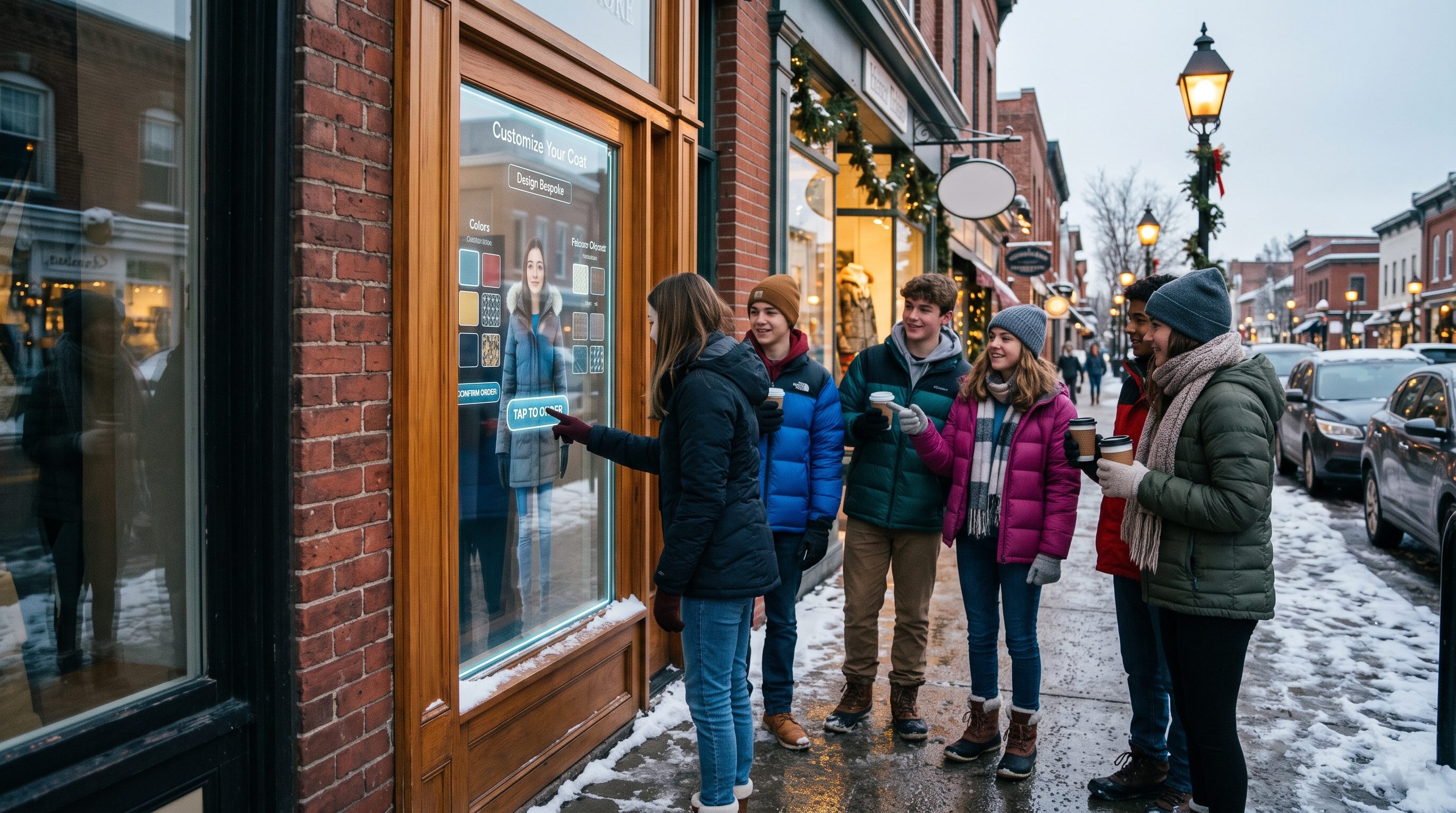
Picture this scenario: A group of teenagers goes out shopping on a Saturday afternoon. They snap on their shopping medallions and stroll down their local Main Street—which now hosts major national brands that can afford to expand into small towns because they no longer carry physical inventory. As the teens approach a storefront window, the brand’s AI recognizes their medallions, pulls up their digital closets, and displays items tailored to their style and existing wardrobe. If something catches their eye, they customize it on the glass, set their criteria (needed-by date and maximum price), tap to order, and keep walking while global fabricators bid to make it.
Even the storefronts themselves won’t stay frozen in time; they will become time-shared ecosystems. Instead of a single tenant locked into a rigid, multi-year lease, physical retail space will evolve hour by hour and day by day. Major national brands can anchor high-traffic weekend rushes and peak hours—subsidizing the prime real estate—while single owner-operators, local artisans, and niche pop-ups take over the same space during quieter weekday mornings or off-peak evenings.
This shift doesn’t just optimize square footage; it rewrites the culture of how we experience cities and shop. Retail moves from passive browsing to on-demand discovery, where checking a storefront on a Tuesday morning versus a Saturday afternoon feels like tuning into a completely different channel. It lowers the barrier to entry for independent entrepreneurs who could never afford traditional Main Street rent, breathes life back into vacant commercial corridors, and turns static shopping districts into living, breathing stages of both local craft and global opportunity.
This viewpoint might seem like a person will only ever be presented with styles and colors that they typically design, but they can share their digital wardrobes with others and be presented with styles and items new to them, borrowing the algorithms used in Pinterest and maybe even tokenizing a royalty to the originator?
How this transition of workforce takes place is above my pay grade, but “The only thing we can be sure of about the future is that it will be absolutely fantastic.” – Arthur C Clark